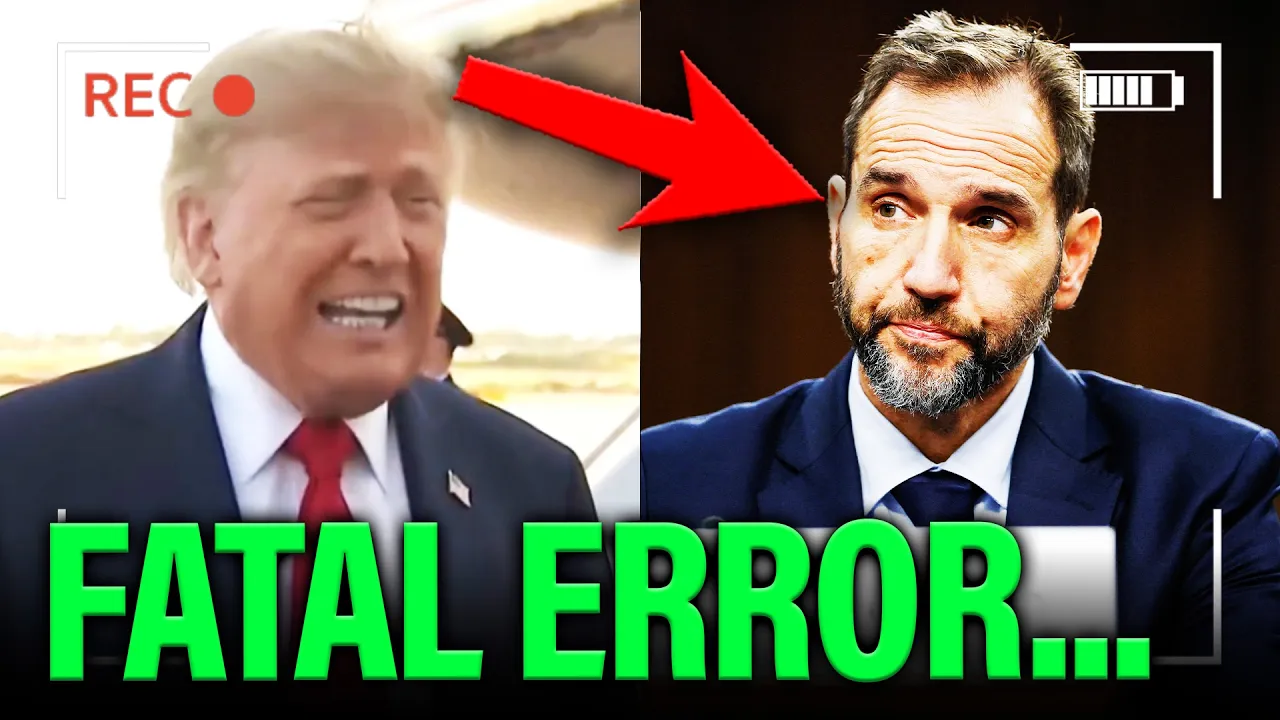
In the high-stakes arena of American politics, few moves are as perilous as picking a fight you cannot win. The Republican Party, seemingly in a perpetual state of war against the Department of Justice, may have just committed a catastrophic blunder with the midterm elections on the horizon. At the center of this political firestorm is Special Counsel Jack Smith, a figure who has become the ultimate boogeyman for the MAGA base. But instead of neutralizing him, the GOP's latest strategy appears to be giving him a massive megaphone just as voters head to the polls.
This isn't just about legal maneuvering; it is about the blunt force of political optics. With less than a month to go before the midterms, the decision to platform Jack Smith—allowing his investigation to dominate the news cycle—seems counterintuitive for a party trying to focused on inflation, crime, and the border. Yet, here we are, watching a political car crash in slow motion, driven by a lawsuit that many legal experts believe is destined for the scrap heap.
The Black Hole of the Blackburn Lawsuit
The latest chapter in this saga involves Senator Marsha Blackburn, a staunch Trump ally, who filed a lawsuit against Jack Smith in the Middle District of Tennessee. Her claim? That Smith violated her rights by obtaining her phone records as part of the investigation into the January 6th Capitol riot. She cites the Speech and Debate Clause, the First Amendment, and the Fourth Amendment, arguing that as a sitting senator, her communications are sacrosanct and beyond the reach of a special counsel.
However, the immediate reception of this lawsuit has been nothing short of a disaster for the Tennessee Republican. In a stunning display of what can only be described as judicial rejection, all four active district court judges in the Middle District of Tennessee recused themselves from the case. This unprecedented mass recusal means that no local judge is willing to touch this political hot potato, forcing the Sixth Circuit to designate an out-of-district judge to hear the matter.
The recusals raise immediate questions. Why would every single judge in a district step aside? While no reasons were provided—as is their right—the timing and totality of the recusals suggest a deep discomfort with the political nature of the suit. It creates an immediate vacuum, delaying the proceedings and signaling that Blackburn's legal theory is so toxic or tangled with local connections that impartiality is impossible to guarantee.
Jack Smith’s Masterful Counter-Punch
The lawsuit stems from the "Arctic Frost" investigation, which probed the efforts to overturn the 2020 election. Jack Smith subpoenaed the metadata of phone records—specifically, who called whom, on what date, and for how long. Notably, he did not request the content of the calls, text messages, or voicemails. This distinction is crucial. Metadata is a standard tool in criminal investigations, used to establish a timeline of events and links between co-conspirators.
Blackburn’s defense hinges on the idea that she is immune from such scrutiny. She claims that because AT&T refused to comply citing the Speech and Debate Clause, Jack Smith should have known better than to ask Verizon for the same records. This argument, however, misinterprets the scope of the privilege. The Speech and Debate Clause protects legislators from being questioned for their legislative acts—speeches on the floor, committee work, etc. It does not grant them a blanket immunity from criminal investigation for potential coordination with a conspiracy to overturn an election.
In fact, legal experts are quick to point out that members of Congress are investigated and prosecuted for bribery, fraud, and other crimes all the time. The records obtained were not about Blackburn's legislative duties; they were about her communications with individuals who were attempting to subvert the democratic process. The fact that she was communicating with targets of a lawful investigation, predicated on probable cause, places her records squarely within the scope of legitimate inquiry.
A Gift to the Democrats?
Politically, this move by Blackburn and her allies is baffling. By filing this lawsuit, she has effectively guaranteed that Jack Smith's investigation remains in the headlines. It reminds voters of the chaos of the post-election period, the violence of January 6th, and the role that Republican lawmakers played in trying to stop the peaceful transfer of power. This is not the messaging the GOP needs 25 days before an election.
Furthermore, the revelation that four Democrats' records were also swept up in the metadata grab destroys the narrative of a partisan witch hunt. This was not a targeted attack on Marsha Blackburn; it was a broad investigative net cast by a prosecutor looking for the truth. The fact that Blackburn is now crying foul while Democrats also had their records scrutinized makes her claims look petty and performative.
Jack Smith's strategy is now clear: he serves the law, not the political calendar. By forcing the GOP to react to his moves, he is dictating the terms of the engagement. Every time a Republican like Blackburn attacks Smith, they remind the American people of what he is investigating. It is a self-inflicted wound that keeps bleeding.
The Role of Judicial Appointments
There is also a deeper layer of irony to the recusals. Jack Smith previously served as the U.S. Attorney for the Middle District of Tennessee. This means he has a history with the local legal community. Two of the judges who recused themselves were on the bench during his tenure. The other two were not, yet they still recused. This suggests that the animosity toward Smith or the fear of the political backlash is so intense that no one wants to be the one to rule against him—or for him.
The case now sits in limbo, waiting for the Sixth Circuit to appoint a judge from outside the district. This delay serves Jack Smith's purposes perfectly. It pushes the legal drama further into the election season, keeping the story alive. The longer this drags on, the more it looks like the GOP is trying to hide something or obstruct justice.
Conclusion
The Republican Party is learning a painful lesson: attacking the legal system is easy on the campaign trail, but much harder in a court of law. By platforming Jack Smith and elevating his investigation into a political crusade, they are playing right into his hands. The motion of the Department of Justice is slow, deliberate, and relentless.
Senator Blackburn’s lawsuit may have been intended to rally the base and cast Smith as a villain, but it has instead highlighted the weakness of the GOP's current position. With judges fleeing the case and the legal merit of the suit thin, this looks less like a legislative stand against tyranny and more like a desperate attempt to avoid accountability.
As the midterms approach, the GOP's fatal error might not be the policies they propose, but the battles they choose to fight. They have given Jack Smith a stage, and he appears to be using it to deliver a knockout blow to the credibility of their obstructionist tactics.


0 Comments