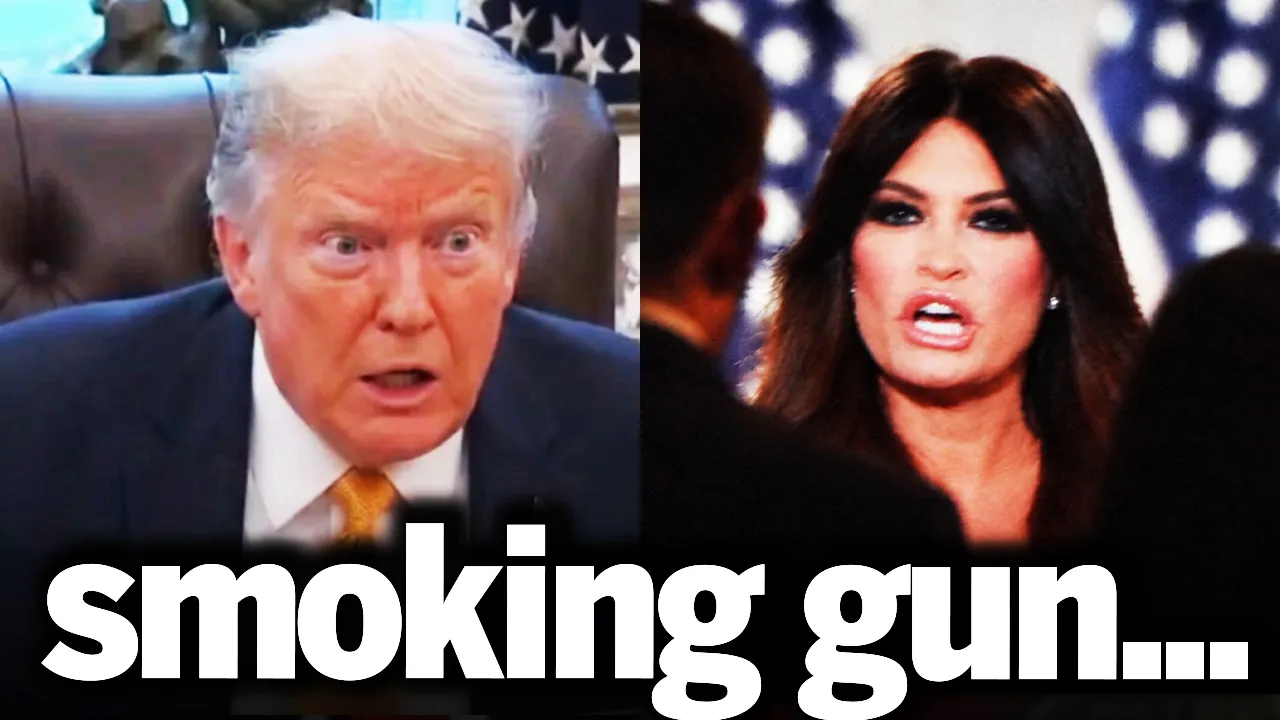
In the summer of 2025, as Washington buzzed with confirmation battles and foreign policy posturing, a series of private messages quietly made their way into the hands of Wall Street Journal reporters. Those messages, attributed to Kimberly Guilfoyle, a former Fox News personality and onetime fiancée of Donald Trump Jr., painted a picture so startling that it has since ignited bipartisan calls for investigation, late-night cable segments, and a flood of social media commentary. The story concerns money, access, and the blurry line between the two in modern American politics, and it centers on a request so blunt that it reads less like a diplomatic exchange than a desperate plea from a debtor.
Who Is Kimberly Guilfoyle?
To understand why these texts matter beyond the tabloid intrigue, it helps to recall the arc of Guilfoyle's public life. She rose to prominence as a prosecutor in San Francisco, then as a co-host on Fox News, where she became a fixture of conservative media for years. In 2018, reporting by journalist Yashar Ali revealed that she was pushed out at Fox amid misconduct allegations, including claims of sexual harassment and a reported habit of showing explicit photographs in the makeup room. She later moved into the Trump political orbit, dating Donald Trump Jr. for an extended period and appearing regularly at rallies and conventions.
By early 2025, Guilfoyle had been nominated to serve as the United States ambassador to Greece, a prestigious post that requires Senate confirmation. That nomination set the stage for the controversy that followed, because the messages obtained by the Journal suggest that in the weeks before her confirmation hearing, Guilfoyle was scrambling to resolve a financial crisis and allegedly offered access to government influence in exchange for money.
The Texts That Changed Everything
According to the Wall Street Journal, Guilfoyle reached out to Eric Deers, a Kentucky businessman and former congressional candidate who had organized an event called Freedom Fest. In messages sent through the encrypted Signal app, she allegedly asked Deers for $100,000 to pay down a balance she owed to American Express. The request was not framed as a loan in the conventional sense. "It won't show up anywhere if you wire the money to American Express," she reportedly wrote, adding that he could "just send it here" and emphasizing that the transaction would leave no paper trail.
Deers, for his part, was not a disinterested party. He had been seeking help with personal tax and legal issues, and he hoped to use Guilfoyle's proximity to the incoming administration to gain traction. The Journal reported that he had promised payments of up to $1 million if her efforts on his behalf succeeded, and that the two had exchanged hundreds of messages, emails, and letters over an extended period. In one exchange, Guilfoyle allegedly forwarded Deers messages she had sent to the new Internal Revenue Service chief and updated him on her efforts to lobby the Department of Justice about his case.
A Quid Pro Quo Narrative
The content of those communications, if authentic, raises serious ethical and potentially legal questions. Federal law generally prohibits public officials from soliciting or accepting anything of value in return for official acts, and the appearance of a sitting ambassador-designate asking a donor for money while promising to use her sway is exactly the kind of scenario that anti-corruption statutes were written to prevent. The messages also suggest that Guilfoyle was aware of the sensitivity of the arrangement. "Eric, I really wish you would stop papering all these things," she wrote in one exchange, according to the Journal, adding that it would be better to communicate by Signal rather than in writing.
In January 2025, weeks after her nomination, she allegedly complained that Deers had told a producer on her podcast about their arrangement. "It's unbelievable when we have a private arrangement with you that you would now CC a producer talking about money," the message read. "Do not say we have any arrangement." She added that he would "literally cost me my ambassadorship" and told him to stop writing. The phrasing is striking because it implies a consciousness of wrongdoing, a fear of exposure that would be unnecessary if the discussions had been innocent.
The Broader Corruption Ecosystem
This episode is not occurring in a vacuum. It is unfolding within a broader pattern that critics have described as the normalization of pay-for-play politics. Donald Trump's inner circle has repeatedly been accused of mixing private business with public service. Reporting has detailed how the former president's eldest son invested in companies that later benefited from policy decisions, how Jared Kushner cut deals in the Middle East that overlapped with his investment portfolio, and how pardon power has been used to reward political allies and donors.
One frequently cited case involves Paul Walczak, who was sentenced to prison for failing to pay over $10 million in taxes from nursing homes he controlled. His mother, a major Trump donor, attended a million-dollar-per-plate fundraiser shortly before a pardon was issued. Another involves Changpeng Zhao, the founder of the cryptocurrency exchange Binance, whose sentence was commuted after extensive lobbying. These examples, taken together, suggest a system in which access and influence are treated as commodities, and in which the line between campaigning and governing has become almost invisible.
Guilfoyle's texts fit neatly into this ecosystem. She was not a rank-and-file staffer; she was a high-profile nominee to a sensitive diplomatic post. If she felt comfortable asking a donor for six figures while dangling the prospect of government help, it says something about the culture she believed she was operating in. It also raises uncomfortable questions about how many similar arrangements exist beyond the ones that happen to leak to the press.
The Response From Washington
When asked about the Journal's reporting, Secretary of State Marco Rubio declined to engage directly. Speaking to reporters before a trip to Greece, he complained about the media's practice of publishing stories based on leaked information and said he would not comment on a story that had posted only hours earlier. "I get the game," he said, arguing that it was not a serious way to conduct policy.
Critics were quick to point out the inconsistency. The same administration has frequently pronounced guilt based on social media posts, called for the arrest of political opponents, and labeled private citizens as terrorists within hours of high-profile incidents. The demand for due process in this particular case struck many observers as selective. Democratic members of the Senate and House Foreign Affairs Committees urged the State Department to review Guilfoyle's conduct, citing both the text messages and a separate Journal investigation into her promotion of a Greek company whose lobbyists traveled with her to meetings across the Balkans.
A lawyer for Guilfoyle disputed the authenticity of the messages but declined to provide specifics. He said she had been paid to speak at events before her nomination and was owed a balance for supporting what he described as patriotic gatherings. Deers, meanwhile, denied allegations of extortion contained in a separate lawsuit and insisted that he had simply asked Guilfoyle to help him get the attention of the Justice Department.
Why This Matters Going Forward
The significance of this story extends beyond one ambassador or one donor. It is a case study in how democratic institutions can be eroded not only by dramatic acts of authoritarianism but also by the slow, mundane accumulation of ethical compromises. When public servants treat their offices as platforms for personal enrichment, when donors believe that access can be purchased, and when oversight mechanisms are weakened or ignored, the result is a government that serves the connected rather than the public.
The text messages also highlight the role of encrypted communication in modern corruption. Guilfoyle's apparent preference for Signal and her warnings about paper trails suggest an awareness that what she was doing would not withstand scrutiny. That awareness makes the conduct more troubling, not less. It implies that the participants understood the rules and chose to work around them.
As the Senate considers her confirmation and as watchdogs examine the broader pattern, the key question is whether any of this will lead to accountability. Historically, allegations of this kind have often faded without consequences, especially when they involve figures with powerful allies. But the public release of the messages has already changed the conversation, and it has given voters a rare window into the mechanics of influence peddling.
Whether this becomes a turning point or just another footnote depends largely on whether institutions are willing to act. The texts themselves are only evidence; what matters is what the Senate, the State Department, and the Justice Department choose to do with them. If the answer is nothing, the message sent to future officials will be unmistakable: the rules are optional, and the price of access is whatever the market will bear.


0 Comments