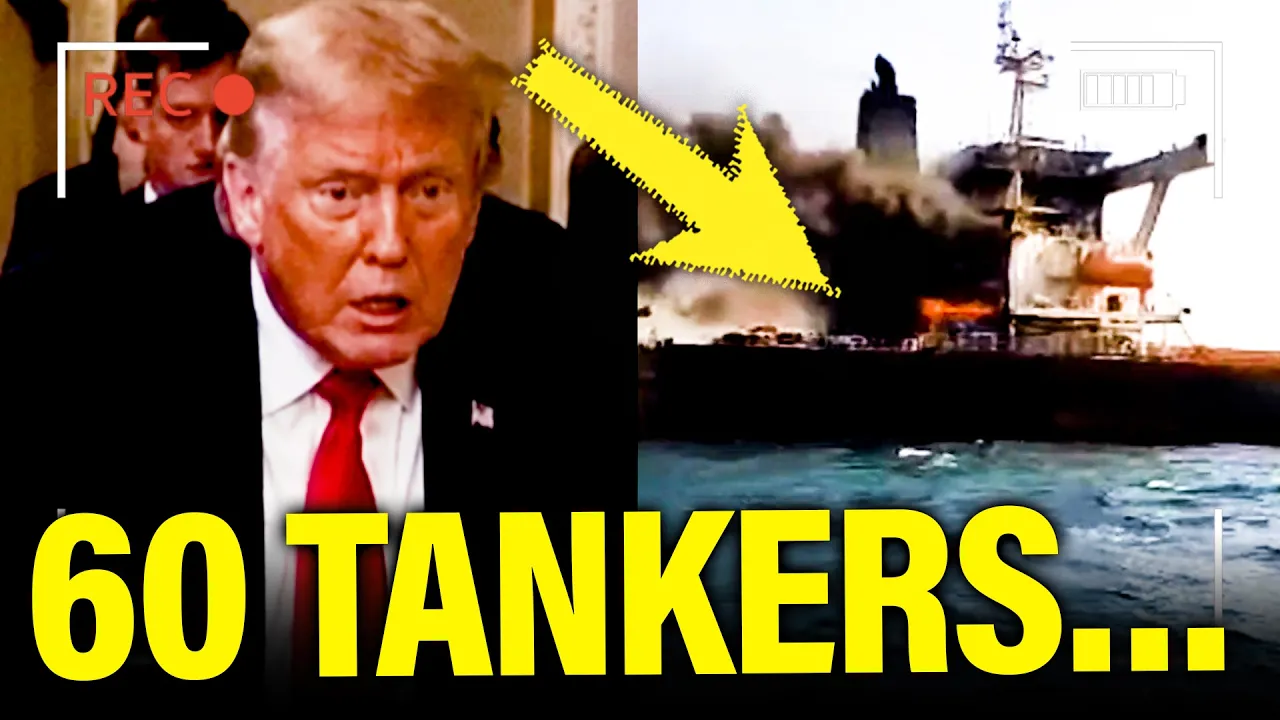
Something extraordinary is happening in the Strait of Hormuz, and the official numbers may be hiding the true scale of the crisis. According to tracking data from the UK Maritime Trade Operations (UK MTO), approximately 30 tanker strikes have been recorded since October 1st. But there is a growing body of evidence suggesting that the real figure could be at least double that number. The reason is simple and deeply troubling: the majority of vessels that have been hit are refusing to report the attacks.
This is not a minor accounting discrepancy. If the true number of strikes is closer to 60, as satellite observations and independent analysts have suggested, then the world is facing a maritime security crisis far more severe than official channels are willing to acknowledge. Understanding why ships are going silent, and what that silence means for global energy markets, is essential to grasping the full picture of this escalating confrontation.
The Reporting Gap: Why Ships Stay Silent
When a commercial vessel is struck by a projectile in one of the world's most strategic waterways, the logical response would be to broadcast the incident immediately. Yet the UK MTO has acknowledged that most hit tankers are not reporting their attacks. This creates a dangerous blind spot for insurers, shipping companies, and governments relying on official data.
There are several plausible explanations for this silence. Shipowners may fear that reporting an attack will trigger higher insurance premiums, or worse, cause their vessels to be flagged as high-risk and denied port access. Some may worry about retaliation from the attacking party. Others may simply want to avoid the bureaucratic and financial fallout of an official incident report.
Whatever the motivation, the consequence is a distorted picture of reality. If only half of the attacks are being recorded, then policymakers and market participants are making decisions based on incomplete information. The floor of 60 struck vessels since October 1st is not a worst-case scenario; it is the minimum figure that credible observers believe to be true.
Brent Crude Surges Past $112
The market reaction to this escalation has been swift and dramatic. Brent crude oil prices have surged above $112 a barrel for the first time since May 6th, and the upward momentum shows no signs of abating. This is not a speculative spike driven by rumor; it is a response to a genuine and widening supply disruption in the world's most important oil chokepoint.
Roughly one-fifth of global oil consumption passes through the Strait of Hormuz. Any sustained disruption to that flow sends shockwaves through every corner of the global economy. Gas prices in the United States have already hit an average of $4.33 per gallon, and diesel prices are climbing even faster. Refined products like jet fuel are expected to see massive spikes and scarcity as well.
- Brent crude above $112 per barrel for the first time since early May
- US average gasoline price at $4.33 per gallon and rising
- Diesel and jet fuel markets facing severe supply pressure
- Inflation expectations pushing higher across major economies
These are not abstract numbers. They translate directly into higher costs for consumers, businesses, and governments already struggling with inflationary pressures. The longer the Strait of Hormuz remains a contested zone, the deeper these economic wounds will become.
The Strategic Petroleum Reserve at Breaking Point
In an effort to stabilize markets, the Trump administration has reportedly sought to draw another 17 million barrels from the United States Strategic Petroleum Reserve. But this strategy carries enormous risks. The SPR has already been depleted to near record lows, and the salt caverns that hold these reserves are approaching what analysts describe as structural decomposition due to overuse.
The reserve was designed as an emergency buffer, not as a routine tool for managing price fluctuations. Drawing it down further in response to a prolonged Hormuz crisis could leave the United States with virtually no cushion for future emergencies. It is a short-term fix with potentially catastrophic long-term consequences.
Attack on the ST3 and the AIS Blackout
On October 16th, India reported that the UAE-owned very large crude carrier ST3 was struck by a projectile in the Strait of Hormuz. Notably, the vessel's Automatic Identification System tracking device had been switched off for approximately 18 days prior to the strike. This detail is significant because it suggests a pattern of vessels going dark to avoid detection, only to be targeted anyway.
At least one and possibly two additional tankers were struck the following morning. One of these vessels was reportedly carrying a mixed cargo that included consumer goods such as electronics and perfume alongside petroleum products. This indicates that the attacks are not limited to oil tankers but are affecting a broader range of commercial shipping.
The use of anti-ship ballistic and cruise missiles, along with Shahid 136 drones, against port anchorages in the UAE represents a serious escalation. Flight disruptions were reported throughout the region, including near Dubai and Fujairah, underscoring how quickly a maritime crisis can spill over into other sectors.
A Regional War Expanding on Multiple Fronts
The conflict is not confined to the Strait of Hormuz. Fighting between Saudi Arabia and the Houthi movement in Yemen has intensified, with the Houthis striking a presidential palace belonging to the Saudi-backed PLC in Aden. Saudi Arabia's interceptor capabilities appear to be insufficient to stop these advances, raising questions about the kingdom's ability to defend itself.
Into this volatile situation steps Donald Trump, who has openly suggested that Saudi Arabia should accept Israel's help in fighting the Houthis. He has also indicated that the Abraham Accords may be back on the table with Saudi Arabia. Crown Prince Mohammed bin Salman has previously stated that he would not join the accords without recognition of a Palestinian state, but the pressure of the current crisis may be forcing a reconsideration.
If Israel, Saudi Arabia, the UAE, and Bahrain were to form a joint front against the Houthis, with Iran launching its own strikes in response, the region would be plunged into an all-out war. Iran has maintained or even increased its ballistic missile, drone, and cruise missile capabilities since the war began, and it has been conducting tests in preparation for a potential invasion.
The Election Factor: National Security Incidents
Both Trump and Israeli Prime Minister Benjamin Netanyahu are trailing in their respective election campaigns. There is growing speculation that both leaders may be seeking a national security incident to shift public opinion before voters go to the polls. Israeli media close to Netanyahu have been discussing the possibility that Iran may engage in a preemptive strike, which would justify a preemptive strike by Israel and the United States.
This is a dangerous game. The line between defensive action and provocation is easily blurred, and a miscalculation could trigger a conflict that no one can control. The world is already witnessing all-out war between Russia and Ukraine, and the addition of a Middle East conflagration would stretch global stability to its breaking point.
Global Fuel Shortages and the Road Ahead
Signs of fuel scarcity are already appearing in unexpected places. Bali has reportedly run out of fuel entirely, and parts of Europe are experiencing diesel shortages at certain stations. These are early warning signs of what could become a global phenomenon if the Strait of Hormuz remains disrupted.
Analysts have suggested that even a perfect deal between the United States and Iran today would not restore normal oil flows quickly. The earliest realistic timeline for recovery is 2029. That means the world could be living with elevated energy prices and supply uncertainty for years to come.
The post-World War II international architecture that the United States helped build was designed in part to prevent exactly this kind of chaos. Tearing it down without a replacement, as some in the current administration seem intent on doing, leaves a vacuum that adversaries are only too happy to fill.
Conclusion: The Escalation Is Real and the Numbers Are Worse Than Reported
The evidence is clear. Iran has likely struck far more tankers than official channels have recorded, and the economic consequences are already being felt around the world. Brent crude above $112, gasoline at $4.33 per gallon, and a strategic petroleum reserve at its breaking point are not hypothetical scenarios. They are the reality of the current moment.
The combination of a maritime cover-up, a regional war expanding on multiple fronts, and political leaders seeking national security incidents before elections creates a volatile mix. Readers should pay close attention to the Strait of Hormuz in the coming weeks, because what happens there will determine the price of energy, the trajectory of inflation, and the stability of the global order for years to come.


0 Comments