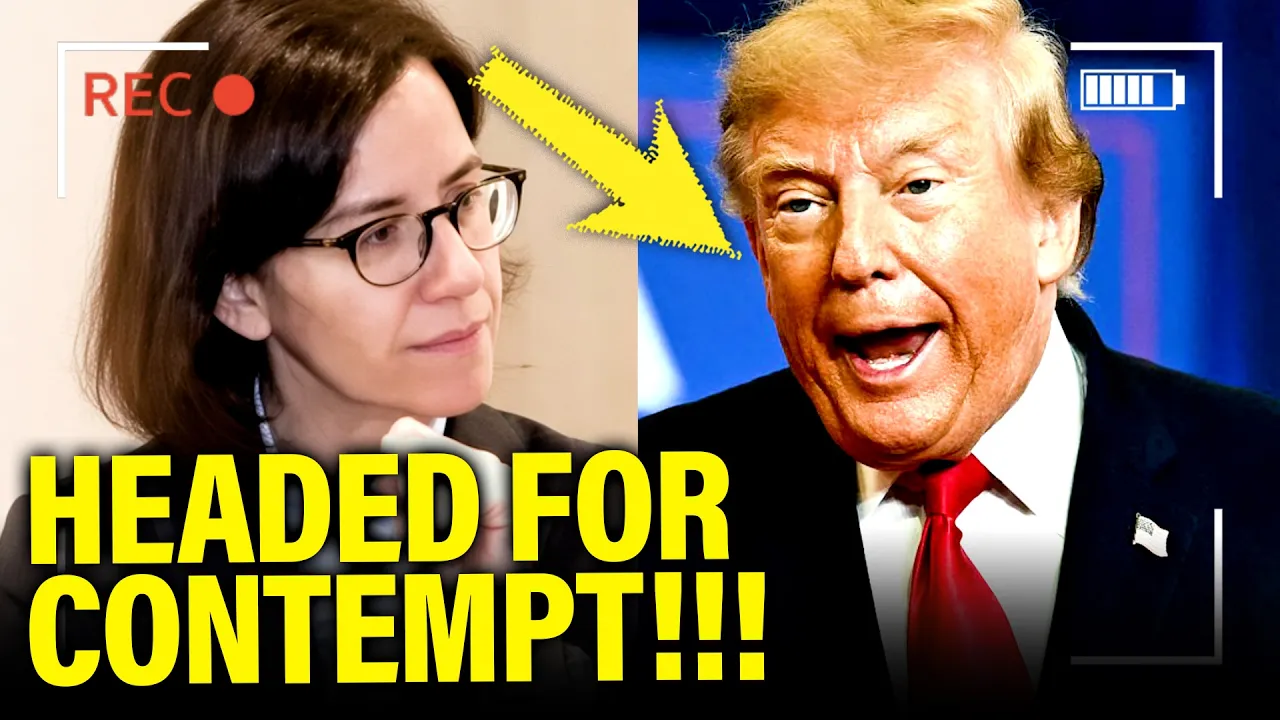
In an extraordinary turn of events, a federal judge has ordered an emergency hearing and demanded the personal testimony of Associate Attorney General Stan Woodward, the third-highest-ranking official at the Department of Justice. The judge’s stark warning—“Clear your calendar, you’re testifying!”—underscores the gravity of the situation and raises serious questions about whether the government misled the court.
Background: The Golf Course and the Rule of Law
At first glance, the case appears to be about a golf course—specifically, the East Potomac Golf Course in Washington, D.C., a historic site with civil rights significance. But as Judge Reyes has repeatedly emphasized, this is not about a golf course or trees. It is about the rule of law and the separation of powers. The judge has made clear that she does not speak for the trees, but for the law and the judiciary’s authority to oversee a presidency that appears out of control.
The dispute centers on the Trump administration’s plan to close the East Potomac Golf Course by November 15. The National Park Service, under the Department of the Interior, operates the course, and President Trump has allegedly directed its closure. The closure has been challenged in court under the Administrative Procedure Act (APA), which requires a “final agency action” before judicial review. The government has consistently argued that no final decision had been made, and therefore the court lacked jurisdiction.
The October 19 Hearing: Woodward’s Representation
On October 19, Associate Attorney General Woodward appeared before Judge Reyes and stated unequivocally that there were “no plans to close the course” on November 15. He assured the court that while the president might want closure, no concrete steps had been taken. The judge relied on this representation in assessing the case. However, later that night, President Trump posted on Truth Social that the golf course would be closed “as scheduled” on November 15. This directly contradicted Woodward’s statement and suggested that plans were indeed in motion.
Judge Reyes, upon learning of the post, issued an order demanding clarification. She noted that the court takes judicial notice of the president’s post and asked the government to reconcile Woodward’s statement with the president’s announcement. The order gave the government until the next day to respond.
The Government’s Response: A Belated Acknowledgment
The government’s response, filed by Woodward, was a single paragraph that acknowledged the president had “twice directed” the Interior and the National Park Service to close the park by November 15. It further stated that the Interior Department was “working to develop a plan to implement that direction” and would provide notice to the court. Notably, Woodward did not explain why he had told the judge there were no plans during the October 19 hearing. Instead, he attempted to cloak the decision in privilege, hoping to shield documents from the court.
Legal analysts, including former federal prosecutor Michael Popok, argue that this response only reinforces that Woodward misled the court. The failure to reconcile his earlier statement with the president’s post, combined with the attempt to assert privilege, suggests a deliberate effort to conceal the truth. Popok predicts that Judge Reyes will strip away any privilege claim, given the fraud on the court.
The Emergency Hearing: Judge Reyes’s Order
Judge Reyes wasted no time. She issued an order scheduling an in-person hearing for Friday at 10:00 a.m. and demanded that Woodward personally appear. The order, written in all caps—a sign of judicial displeasure—directs the government to be prepared to address three key issues:
- Whether the government continues to maintain that there is no final agency action, despite the president’s directive and the Interior Department’s plan development.
- The dates and times when President Trump twice directed the Interior and the National Park Service to close the park by November 15, to establish a timeline and determine when Woodward’s representation became false.
- The first date when the Interior Department began working to develop a plan to implement the closure.
Additionally, the judge ordered the attendance of at least one counsel from the Department of the Interior’s Office of the Solicitor with pre-existing experience on the case. This is a direct response to the government’s practice of sending lawyers unfamiliar with the case to argue before the court, a tactic that has frustrated the judge.
Analysis: The Rule of Law at Stake
This case transcends the fate of a golf course. It is a test of whether a federal judge can enforce her orders and hold the executive branch accountable. The government’s shifting explanations and its attempt to avoid transparency strike at the heart of the judicial process. If a high-ranking DOJ official can mislead the court without consequence, the rule of law is severely undermined.
Judge Reyes’s decision to compel Woodward’s testimony is a bold assertion of judicial authority. By requiring his personal appearance, she signals that she will not tolerate obfuscation. The hearing is likely to be contentious, with the judge pressing Woodward on the discrepancies in his statements. The government’s claim of no final agency action is now untenable, given the president’s public directive and the Interior Department’s admitted plan development.
Moreover, the judge’s insistence on a knowledgeable Interior Department lawyer suggests she is preparing to delve into the substantive merits of the case. The government’s argument that the golf course is decrepit and must be closed due to the termination of its operator is a self-fulfilling prophecy—the administration created the condition it now cites as justification. The APA’s arbitrary and capricious standard will likely be central to the court’s review.
Conclusion: A Reckoning Awaits
As Judge Reyes prepares to grill Stan Woodward on Friday, the legal community and the public await the outcome. This is not about a golf course; it is about whether the Department of Justice can flout court orders and mislead judges with impunity. The judge’s message is clear: clear your calendar, Mr. Woodward—you’re testifying. The rule of law hangs in the balance.


0 Comments