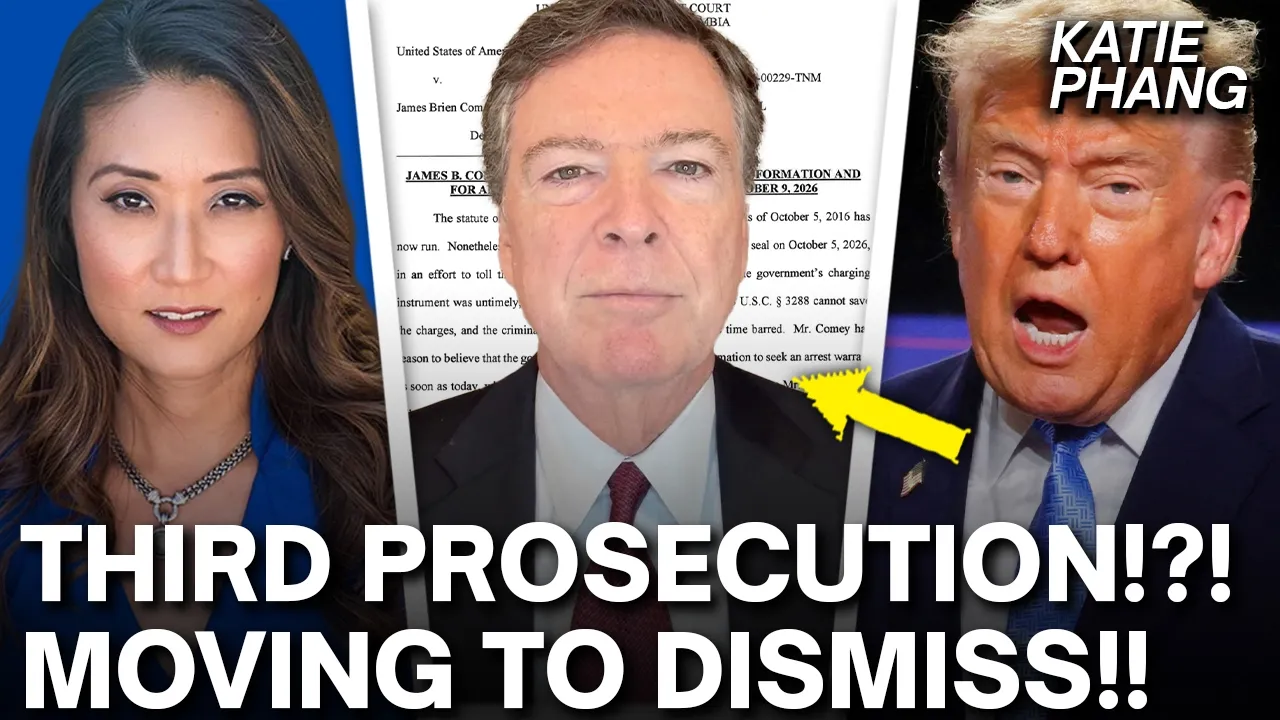
In a move that has stunned legal observers and raised serious questions about the integrity of the Justice Department, the Trump administration has filed criminal charges against former FBI Director James Comey—five years after the statute of limitations had already expired. The two-count information, filed under seal on October 5, 2026, and unsealed only after Comey’s legal team forced the issue, alleges unauthorized disclosure of national defense information and conspiracy. But the filing is riddled with procedural and substantive defects that make it a legal Hail Mary rather than a legitimate prosecution.
The Charges and the Charging Instrument
The case, brought by way of an information rather than an indictment, bypassed the grand jury process entirely. This is a critical distinction. An indictment requires a grand jury of citizens to find probable cause; an information is simply a prosecutor’s allegation. Given the Trump DOJ’s recent track record of grand juries rejecting its politically motivated charges, it is no surprise they chose to avoid that check. The information was filed in the U.S. District Court for the District of Columbia and assigned to Judge Trevor McFadden. It names only one defendant: James Brian Comey Jr., and carries the case number 26-CR-00229-TNM. Notably, the document is marked “corrected copy,” indicating that even the initial filing was botched.
Statute of Limitations: A Fatal Flaw
The events in question date back to October 2016, when Comey allegedly directed his staff to communicate with a New York Times reporter to correct misinformation published by Reuters. The government claims that the resulting Times article contained details “significantly similar” to an internal government email sent to about 30 people in the intelligence community. Under the applicable five-year statute of limitations for unauthorized disclosure of national defense information, charges had to be brought by October 2021. The government missed that deadline by five years. In a desperate attempt to toll the limitations period, they cited the Internal Security Act of 1950, which provides a ten-year statute of limitations—but only for indictments, not informations. And even if that statute applied, they filed five days too late. As Comey’s motion to dismiss argues, the information is time-barred and should be dismissed.
Under Seal: A Cover-Up of Incompetence
When the government filed the information on October 5, it also moved to seal the case, claiming there were unindicted co-conspirators and that public notice would compromise ongoing investigations and endanger cooperating witnesses. Yet when Comey’s team sought to unseal the case, the government did not object. Judge McFadden granted the unsealing order on October 26. Why the sudden reversal? Because the sealing was never about protecting investigations; it was about hiding the filing from public scrutiny. This bad-faith maneuver fits a pattern: the DOJ wanted to slip the charges in under the cover of darkness, hoping no one would notice the glaring legal deficiencies. Comey’s legal team also expressed concern that the government planned to use the faulty information to seek an arrest warrant as soon as October 9, potentially resulting in an after-hours arrest that would leave Comey in jail over a holiday weekend. This is not how justice works; it is how political retribution works.
Who Signed the Information? The Lackeys’ Lackeys
The information was signed by Acting Deputy Attorney General Trent McCotter and attorney Akos Singh, along with three special assistant U.S. attorneys: Patrick Hoppel, Dustin Ferick, and Justin Meckler Silverberg. These are not career prosecutors from the D.C. U.S. Attorney’s Office. Hoppel is from Florida; the others graduated law school in 2020 or 2021. They are young, inexperienced, and seemingly willing to stake their bar licenses on a politically motivated prosecution. Akos Singh, in particular, was recently criticized by a federal judge in the Kilmar Abrego Garcia case for vindictive and selective prosecution. It is telling that no seasoned career prosecutor would sign off on this flawed information. The DOJ has been reduced to relying on loyalists who put allegiance to Donald Trump above legal ethics.
Other Prosecution Teams Declined to Charge
Perhaps the most damning footnote in the information acknowledges that multiple other prosecution teams—including those led by former Special Counsel John Durham—reviewed these same facts and declined to prosecute Comey. The government’s own filing admits that “multiple other prosecution teams” found no case. This is not a close call; it is a case that has been rejected by prosecutors across administrations, including within the Trump DOJ itself. The fact that it is being brought now, only days before the midterm elections and on the same day Comey’s daughter won her lawsuit against the DOJ for politically motivated termination, reeks of retaliation. It is a chilling message: if you cross Donald Trump, he will weaponize the federal government to come after you, even if the law is not on his side.
The Grand Jury Rejections and the Real Motive
This is the third attempt to charge Comey. The first, in the Eastern District of Virginia, was dismissed after a judge found the appointment of prosecutor Lindsay Halligan invalid and after affirmative misrepresentations were made to the grand jury. That indictment, along with one against New York Attorney General Letitia James, was thrown out. The second attempt, in North Carolina, produced a dubious indictment that raised serious questions about grand jury presentations. Now, the third attempt bypasses the grand jury altogether. The pattern is unmistakable: when grand juries reject the DOJ’s politically charged presentations, the department simply finds another way to bring charges. This is not about justice; it is about targeting perceived enemies.
The Allegations and Comey’s Denial
The government alleges that Comey directed his staff to speak with a New York Times reporter in October 2016 to correct a Reuters article. According to the DOJ, the resulting Times story contained information “significantly similar” to details in an internal government email sent to about 30 people hours earlier. Comey has flatly denied these allegations, and the footnote in the information itself notes that he “maintains his innocence” and that multiple prior prosecution teams declined to prosecute. The timing—five years after the statute of limitations expired and just before the midterms—suggests this is not a good-faith prosecution but a political hit job.
The Legal Defects Are Insurmountable
The information is fatally flawed on multiple grounds. First, it is untimely: the five-year statute of limitations expired in 2021. Second, the government cannot rely on the ten-year statute of limitations under the Internal Security Act because that statute requires an indictment, and they filed an information. Third, the filing was sealed in bad faith and then unsealed without objection, demonstrating that the government’s claimed justifications were pretextual. Fourth, the information is a “corrected copy,” showing sloppiness. Fifth, it was signed by inexperienced political appointees rather than career prosecutors. Any one of these defects would likely lead to dismissal; together, they make the case a legal embarrassment.
Conclusion: A Chilling Message and a Fight Worth Watching
The charges against James Comey are not about justice; they are about sending a chilling message to anyone who dares to oppose Donald Trump. Fortunately, Comey has assembled a formidable legal team, including Pat Fitzgerald and Michael Dreeben, who are fighting back. The case will hinge on the statute of limitations and the charging instrument, and it is likely to be dismissed. But even if it is, the damage to public trust has been done. The Trump DOJ has demonstrated that it will stop at nothing to punish perceived enemies, even if it means ignoring the law. This is a battle for the rule of law itself, and it is one that every American should be watching closely.


0 Comments