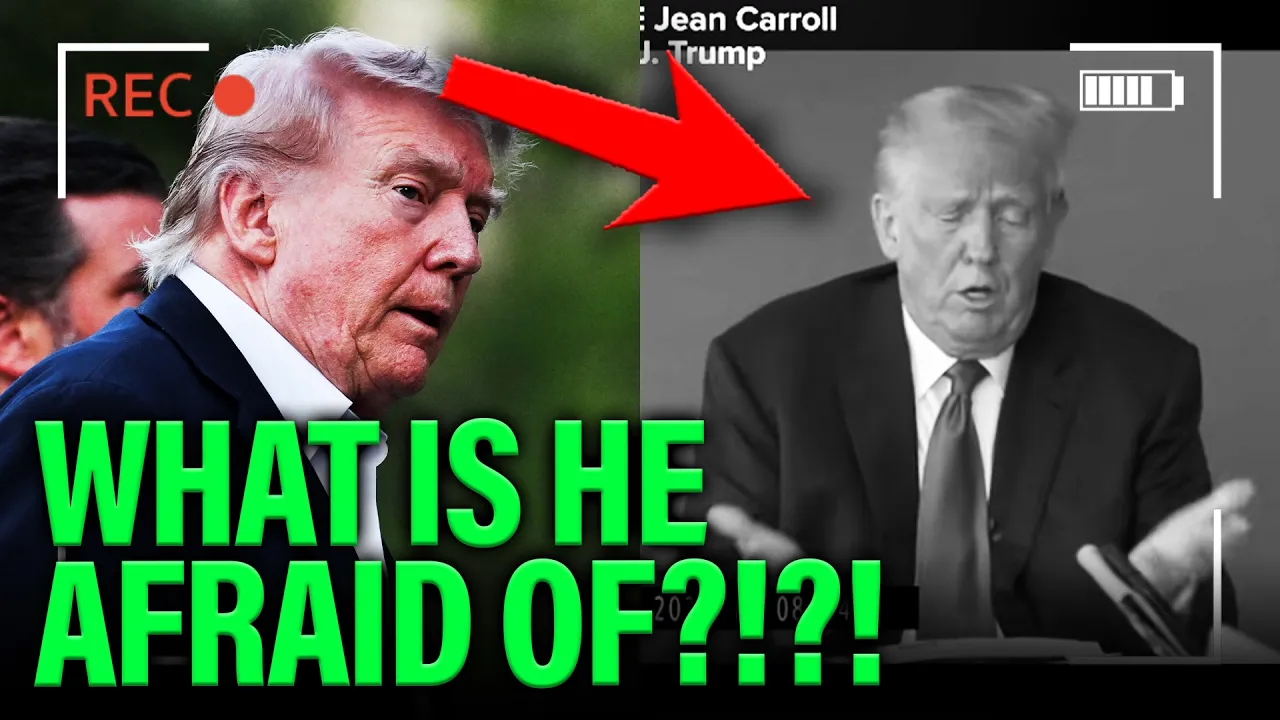
The $10 Billion Lawsuit That Went Off the Rails
When a public figure files a ten-billion-dollar defamation lawsuit, the expectation is that he intends to fight for it. Yet the case that Donald Trump brought against the BBC has arrived at a strange and telling crossroads: the man demanding billions now stands accused of refusing to answer questions under oath about the very harm he claims to have suffered.
According to court filings described in recent legal commentary, a federal magistrate judge has issued a pointed warning that sanctions will follow if the plaintiff continues to stonewall discovery. The court's patience, in other words, is not infinite. This is not a routine scheduling dispute; it is a test of whether a plaintiff can use the courts as both sword and shield.
The underlying facts are important to understand before examining the standoff. The BBC produced a documentary about January 6 that spliced together separate portions of Trump's speech, making it appear that he delivered certain inflammatory remarks in one continuous statement. In reality, those remarks were separated by roughly fifty minutes of other content in the original speech.
The BBC acknowledged that the edit created a misleading impression and issued an apology. That concession matters, and it reflects a genuine failure of editorial standards. But an apology for a misleading edit is not the same as a ten-billion-dollar liability, and that distinction sits at the heart of everything that follows.
The Original Sin: A Misleading Edit
There is no question that the BBC erred. Splicing separate remarks into a continuous statement distorts what a speaker actually said, and news organizations have an obligation to present quotes accurately. The network effectively admitted as much by apologizing to the audience.
Yet the fact that the underlying words were actually spoken complicates the picture considerably. Trump did make inflammatory comments before the crowd on January 6. The misconduct was in the presentation, not in the invention of statements he never made. That difference is legally significant.
To prevail in a defamation case, a plaintiff must prove that the defendant published a materially false statement of fact, did so with the requisite level of fault, and caused a legally cognizable harm. Each of those elements must be supported by evidence, not merely asserted in a complaint.
Because Trump is unquestionably a public figure, the First Amendment imposes a higher burden. He would need to demonstrate actual malice, meaning the BBC published the defamatory falsehood with knowledge that it was false or with reckless disregard for the truth. That is a demanding standard that many plaintiffs never clear.
Five Months of Pleadings and Seven Depositions
The BBC, for its part, appears to be conducting a serious defense. Its lawyers have already taken the depositions of seven BBC witnesses. This is not the behavior of a defendant hoping to settle quickly and quietly.
Instead, the network has signaled that it intends to test every element of the claim. Its defenses include questions about whether the documentary was published to a sufficient audience in Florida, where the lawsuit was filed. It has also raised the question of whether Trump can prove the harm he alleges.
This is where the discovery fight becomes so revealing. If you file a lawsuit claiming reputational damage measured in billions, you should expect to explain how you computed that figure. You should expect to be asked what statements you understood yourself to be making on January 6.
Those questions go directly to the BBC's defenses. The network has plausibly argued that if its edit misrepresented Trump's meaning, then Trump should be eager to set the record straight about what he actually intended to communicate. Refusing to answer, by contrast, suggests the questions are unwelcome rather than irrelevant.
A Deposition That Never Happened
The timeline is damning. According to the BBC's lawyers, they have been trying to schedule Trump's deposition since July. The parties reportedly reached an agreement for an October 16 date, only to have Trump's attorneys back out on September 28.
The stated reason was that the president was no longer available due to other matters of national importance. Few would dispute that the Oval Office brings genuine and overwhelming demands. But the remedy for a busy schedule is accommodation, not cancellation.
The proposed fallback was extraordinary: Trump's lawyers reportedly offered January 2027 as the earliest availability. The problem is that discovery in the case is scheduled to close on December 18, 2026. In other words, the only offered deposition date falls after the deadline to gather evidence has already passed.
The effect would be to allow the plaintiff to demand ten billion dollars while shielding himself from questioning entirely until the window for building a defense has closed. The BBC's lawyers were understandably unwilling to accept that arrangement, and they asked the court to intervene.
The Judge's Warning Is Not a Suggestion
The court's response has been unmistakable. In the order described in legal commentary, the magistrate judge noted that the court had previously admonished the plaintiff for his lack of participation to no avail. Going forward, the order states, strict compliance is expected, and failure will lead to sanctions.
That language is significant because federal judges do not use the word sanctions casually. It is a formal warning that the machinery of enforcement is now available. The court has moved from persuasion to consequence.
Some observers may wonder whether a sitting president can be compelled to sit for a deposition in a civil case at all. The answer, established long ago, is yes. President Bill Clinton was deposed in 1997 in the Paula Jones case.
Clinton argued that civil litigation concerning conduct unrelated to his official duties should be delayed until after he left office. The Supreme Court unanimously rejected that argument, holding that the presidency does not create a blanket immunity from civil discovery. Courts can and do accommodate official responsibilities when scheduling, but they do not permit indefinite delay.
What the Federal Rules Actually Allow
Under Rule 37 of the Federal Rules of Civil Procedure, judges have a range of tools to address discovery violations. They can order a party to comply, and they can impose monetary sanctions covering the reasonable expenses caused by the violation, including the costs of rescheduling a deposition and court reporter fees.
If a party disobeys a discovery order, the consequences escalate. The court can prevent that party from introducing certain evidence, which in a defamation case could cripple the plaintiff's ability to prove harm. At the extreme, the court can dismiss the lawsuit altogether.
Dismissal is the nuclear option, but it exists for a reason. A plaintiff who files a case voluntarily submits to the discovery process that comes with it. A litigant cannot invoke the power of the courts while simultaneously refusing the obligations that accompany that invocation.
There is a strategic irony here as well. Trump has demonstrated a pattern of filing high-profile lawsuits that generate headlines, then resolving or abandoning them before full discovery begins. These cases produce the initial splash of publicity, but they rarely reach a trial.
What Is He Avoiding?
The most revealing question is not procedural but substantive: what is Trump trying to avoid answering? A plaintiff in a defamation case about January 6 coverage exposes himself to probing questions about January 6 itself.
What did he intend to communicate when he addressed the crowd? What did he understand about the events unfolding at the Capitol as they happened? Those questions are directly relevant to the BBC's defenses, including whether the network's edited version changed the meaning of what he actually intended.
The BBC has also sought testimony from people close to Trump, reportedly including Ivanka Trump, Donald Trump Jr., and Jared Kushner. This indicates a defense strategy built around a full record, not a quick exit.
There is also the matter of damages. To support a claim of reputational harm worth billions, a plaintiff needs evidence of how that figure was calculated. A number stated in a complaint is not proof. It is an allegation, and allegations must be substantiated through discovery.
The Trouble With Filing Suits You Won't Defend
Filing a lawsuit is relatively easy. A lawyer drafts a complaint, the filing fee is paid, and the machinery begins to turn. Winning a lawsuit is a different matter entirely, and it requires evidence, credibility, and compliance with court orders.
This case illustrates the gap between those two realities. The BBC made a genuine editorial error and apologized, which gives Trump a legitimate grievance. But a legitimate grievance is not automatically a ten-billion-dollar claim, especially under the demanding actual-malice standard that applies to public figures.
The spectacle of a plaintiff refusing to be deposed undercuts the very premise of the case. If the harm is real and the claim is strong, the plaintiff should welcome the opportunity to explain it. If the questions are unwelcome, the court will draw its own conclusions about why.
Judge's next move will depend on whether Trump complies. The court has given clear notice that further noncompliance will trigger sanctions. The BBC, meanwhile, has shown that it intends to defend itself with aggressive, well-resourced lawyers rather than write a check.
Conclusion
The collision between a ten-billion-dollar demand and a refusal to answer questions has become the defining feature of this case. The BBC committed a real error, and it has admitted as much. But a plaintiff who wants billions must prove the damage, and proving damage requires evidence that only discovery can produce.
Federal courts grant no immunity from that obligation, not even to a sitting president. The Clinton precedent settled the constitutional question years ago. What remains is a simpler and more fundamental issue: whether the plaintiff will follow the rules he invoked by filing the case in the first place.
If he does not, the sanctions tools are available and the judge has now made clear that she intends to use them. If he does, the substance of the January 6 conduct and the claimed harm will finally be tested. Either way, the case is no longer just a headline. It is a courtroom test of whether accountability applies equally to those who use the courts for publicity.


0 Comments