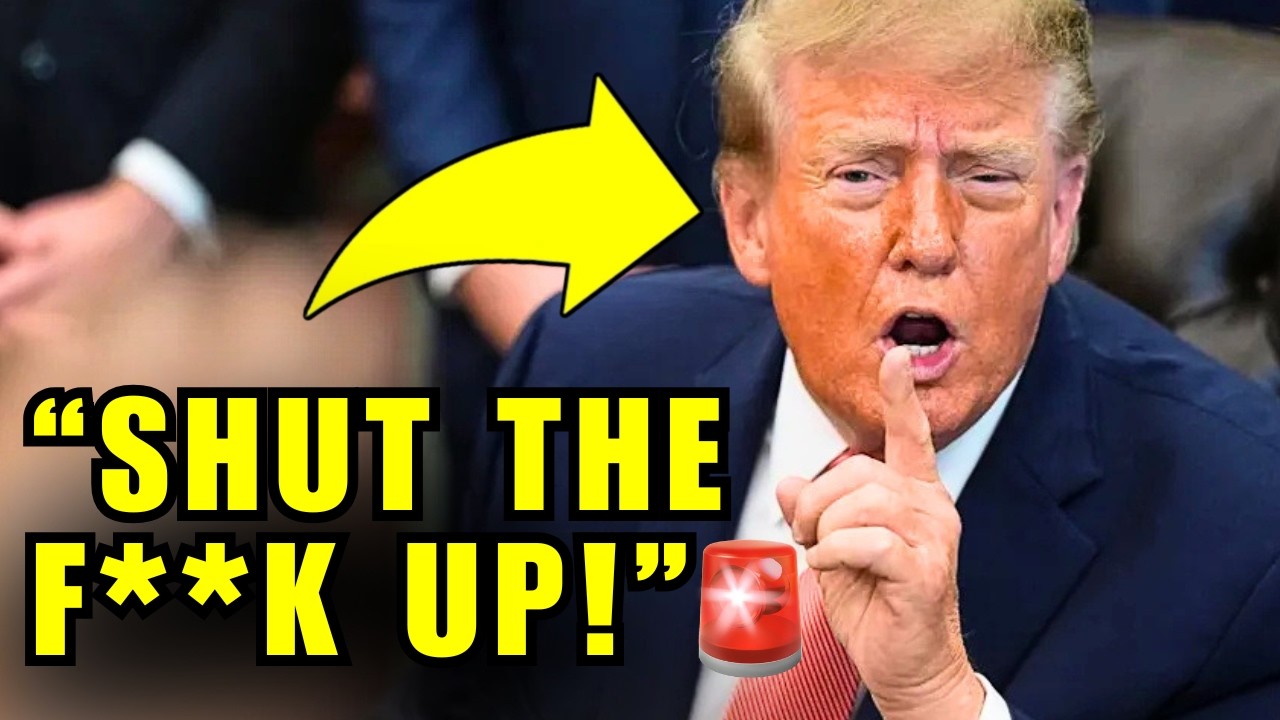
In a startling display of aggression that has ignited a firestorm of criticism, President Donald Trump lashed out at reporters during what was supposed to be a routine Oval Office event on Tuesday. The president, visibly agitated, called one journalist a 'sick person' and warned another to 'be careful,' turning a policy announcement into a spectacle of vitriol. The outburst, captured on video and rapidly circulating across social media, has raised serious questions about Trump's temperament and his ability to handle press scrutiny as he navigates a contentious second term.
The Incident: A Breakdown in Decorum
The event was intended to highlight a new government initiative targeting fraud, but it quickly devolved into chaos as reporters jockeyed for questions on a range of topics, including the war in Ukraine and political unrest in France. Trump, appearing frustrated by the barrage, struggled to maintain control. 'Wait, wait, wait. No, I think there's something wrong with you,' he snapped at one reporter, his voice rising. The situation escalated when he singled out Andrew Feinberg, a White House correspondent for The Independent, who had apparently tried to get his attention. 'I'm not listening to you. You better be careful,' Trump warned, before adding, 'I don't know who the hell you are.' Feinberg later took to X (formerly Twitter) to clarify that he had introduced himself to the president just minutes earlier.
But the most shocking moment came when Trump directed his ire at another journalist who attempted to interject. 'Why? What's wrong with you? Are you a sick person?' he barked. 'I actually think there's something wrong with you.' The personal insult, delivered with a sneer, left the room stunned. Trump also interrupted a question about France's presidential election with a curt 'Hold it, please. You'll come relax,' further demonstrating his impatience with the press corps.
Context: A Pattern of Hostility
This latest eruption is hardly an isolated incident. Trump's relationship with the media has been adversarial since his first campaign, but his behavior in the Oval Office on Tuesday marked a notable escalation in both frequency and intensity. From his early rallies where he encouraged supporters to 'get him the hell out of here' to his mockery of a disabled reporter, Trump has consistently attacked journalists who challenge him. His insults have grown more personal over time, targeting reporters' intelligence, appearance, and now, their mental health.
Critics argue that this pattern reveals a deep-seated intolerance for scrutiny and a willingness to demean anyone who dares to question him. 'This is what reveals the way he really feels about what should be done to anybody who questions, disrupts, points a finger at him being wrong, or most of all takes the spotlight from him,' said one commentator. The Oval Office outburst, in particular, has been interpreted as a sign of mounting stress as Trump faces legal battles, political opposition, and declining approval ratings.
Analysis: A President Under Pressure
Trump's outburst comes at a precarious moment in his presidency. The war in Ukraine continues to dominate foreign policy discussions, and his administration's new fraud initiative has been met with skepticism. Moreover, his recent overtures toward Russian President Vladimir Putin have drawn bipartisan criticism, fueling speculation about his motivations. Against this backdrop, Trump's inability to handle tough questions appears symptomatic of a broader struggle to manage the pressures of office.
Psychologists and political analysts have noted that Trump's behavior—his quick temper, his tendency to lash out, his preoccupation with loyalty—suggests a leader who feels besieged. 'He's never had to learn how to truly fend for himself or fight off criticism,' said one observer. 'He's always had an army of people to protect him, lie for him, scapegoat for him, or simply pay off people to keep them away from him. Now he's running out of defenses fast.' This sense of isolation may be exacerbated by the natural aging process; at 78, Trump is the oldest president in history, and some critics have speculated about cognitive decline, though such claims remain unsubstantiated.
Supporters, however, defend Trump's combative style as a necessary response to a hostile media. They argue that reporters often provoke him with unfair questions and that his bluntness is refreshing. Yet even some allies have privately expressed concern that his outbursts are counterproductive, distracting from his policy agenda and reinforcing negative perceptions.
The Media's Role: Provocation or Accountability?
The incident also raises questions about the role of the press in such confrontations. Reporters in the Oval Office are tasked with asking tough questions, but the competitive nature of modern journalism can lead to chaotic scenes. On Tuesday, multiple journalists shouted over one another, creating an environment ripe for conflict. Trump, who thrives on conflict, seized the opportunity to play the victim, framing himself as besieged by an unruly press corps.
Yet the onus ultimately falls on the president to maintain decorum. The Oval Office is a symbol of American democracy, and the president's behavior there sets a tone for the nation. By resorting to personal insults, Trump diminished the office and undermined the seriousness of the event. His 'sick person' remark, in particular, crossed a line, trivializing mental health struggles and demonstrating a lack of empathy.
Conclusion: A Defining Moment
Trump's Oval Office meltdown is more than a momentary lapse in temper; it is a window into his psyche and his approach to leadership. As he faces mounting challenges at home and abroad, his inability to engage with critics respectfully raises doubts about his fitness for office. The video of the incident, now viral, will likely be used by opponents to argue that Trump is unraveling. For his supporters, it may reinforce their belief that he is a fighter standing up to a biased media. Either way, the episode underscores the deeply polarized nature of American politics and the high stakes of the upcoming election.
In the end, the president's words—'You're sick'—may haunt him. They reflect a leader who, when confronted with dissent, resorts to insults rather than dialogue. In a democracy, that is a troubling sign. As the nation watches, it must decide whether such behavior is acceptable in the highest office in the land. The answer, for many, is a resounding no.


0 Comments