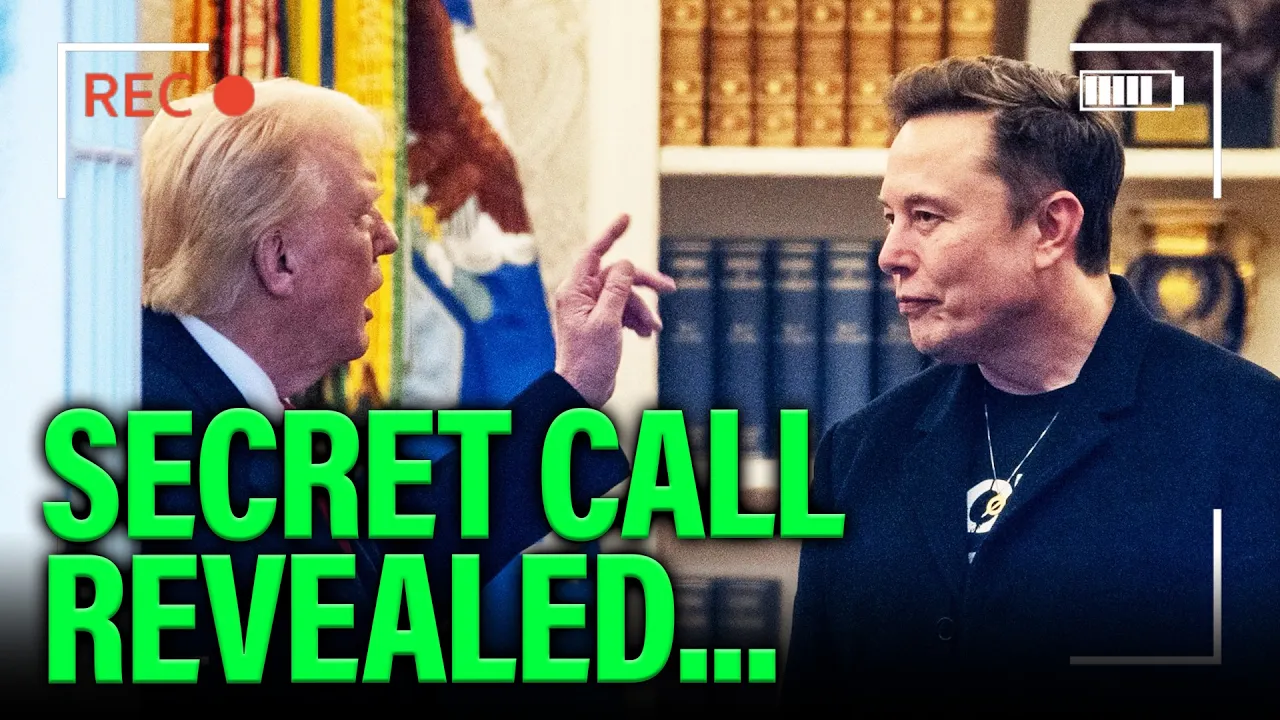
In a revelation that has sent shockwaves through Washington and European capitals, sources within the US government have disclosed that President Donald Trump placed a direct phone call to Elon Musk on Wednesday, requesting the SpaceX CEO to lift severe speed and operational restrictions on Star Shield, the military-grade version of Starlink used by Ukrainian forces. The call, described by insiders as brief and transactional, was allegedly aimed at restoring critical satellite communications that had been throttled for weeks, impairing Ukraine's ability to defend against Russian attacks. Within hours of the call, US and Ukrainian officials confirmed that the system was operating at higher speeds, though not fully restored. The episode has ignited a geopolitical firestorm, with foreign policy experts and diplomats calling it an unprecedented betrayal of a sovereign ally and raising profound questions about the privatisation of national security and the reliability of American leadership.
Background: The Star Shield Crisis
For months, Ukrainian forces have relied on Star Shield to maintain battlefield communications, track incoming Russian ballistic missiles, and coordinate drone operations. The system, a military-grade variant of Elon Musk's Starlink constellation, has been a lifeline for Kyiv since the early days of the war. However, in recent weeks, Ukrainian commanders reported a drastic slowdown in data speeds and intermittent disruptions, severely hampering their ability to intercept Russian attacks. According to US officials, the throttling was not the result of Russian jamming or technical failure but a deliberate restriction imposed by SpaceX, allegedly at the behest of Musk himself.
Musk has publicly denied any wrongdoing, claiming on X that Star Shield is controlled by the US government and that any limits on speed or usage are decided by the US military and ultimately the president. Yet his denial has been met with scepticism, especially given his increasingly vocal far-right political shift and a well-documented preference for Russia's geopolitical narrative in the conflict.
The Secret Call: What We Know
According to multiple sources familiar with the conversation, Trump's call to Musk was direct and blunt. "Why did you guys slow down the Starlink or the Star Shield for Ukraine?" Trump asked, according to a transcript of the call reviewed by US officials. Musk reportedly replied, "I didn't do that. No, we didn't do that at all. In fact, I don't know where it is. I don't even think it was slowed down, but from what I because I just checked this morning. I heard about it through the news from the media and we didn't slow it down at all and I think it's probably functioning from what I understand."
Despite Musk's denial, the timing of the call and the subsequent restoration of higher speeds has raised eyebrows. By Thursday, US and Ukrainian officials confirmed that the system was operating more normally, though several Ukrainian officials emphasised that the network had not been fully restored and was merely functioning at higher speeds than under the severe cap.
Reactions from Kyiv and Europe
Ukrainian officials have long suspected that Washington used satellite access as a bludgeon to force Kyiv into making unilateral concessions to Moscow. The sudden throttling of Star Shield, coupled with reported disruptions to real-time intelligence sharing, severely impaired Kyiv's ability to intercept Russian attacks. While the Trump administration officially disputed claims that Washington ordered the throttling, the timing of the crisis laid bare a sobering reality: critical military infrastructure can be throttled at a whim or restored via an informal phone call between the US president and a private billionaire.
European leaders have reacted with alarm and fury. Foreign officials steeped in diplomacy note that managing Trump has become an impossible exercise, as there is no immunity to a president who makes a deal simply to demand a better one the following day. The realisation that a private citizen like Musk can wield such influence over battlefield outcomes has terrified leaders across the continent, prompting urgent discussions about diversifying security alliances and reducing dependence on US technology.
Musk's Motivations and Denials
Defence analysts point out that Musk's motivation to throttle Star Shield stems from his increasingly vocal far-right political shift and a well-documented preference for Russia's geopolitical narrative in the conflict. Leading to widespread suspicion that he weaponised his private satellite network to force Ukraine into compliance. Despite these allegations, Musk forcefully denied responsibility on social media, claiming on X that Star Shield is controlled by the US government and asserting that any limits on speed or usage are decided by the US military and ultimately the president of the United States.
However, critics argue that Musk's denial is disingenuous, given that SpaceX owns and operates the constellation and has previously imposed restrictions on Ukrainian use. The episode has exposed a glaring loophole in international security: private companies can exercise immense leverage over sovereign states, often with little accountability.
The Broader Pattern: Trump's Transactional Foreign Policy
This latest blow-up over Ukraine is emblematic of Trump's persistent and unpredictable approach to foreign policy. Even when Trump stages a temporary retreat, he eventually returns in new surprising modes to push his core agenda and exhaust allies into submission. His messaging remains highly inconsistent and non-strategic, obscuring a single-minded pursuit of transactional deals while battling dementia and severe mental health issues.
Not long ago, Trump seemed to have patched up ties with Ukrainian President Volodymyr Zelensky, particularly after signing legislation championing heavy new sanctions and tariffs against Russia. Yet the unpredictable shifts in Washington quickly erased those assurances. Trump waved many penalties on Russia, lifting sanctions and moved to purchase Russian diesel, then signalled a greater interest in doing business with Moscow than seeking justice for Kyiv.
It has also been reported that special envoys Jared Kushner and Steve Witkoff have been actively negotiating with Russian President Vladimir Putin to broker the sale of billions of dollars in state-controlled Russian energy infrastructure. The primary beneficiaries of these acquisitions are not the American public but a tightly-knit circle of Trump family financiers, campaign mega donors, and foreign backers.
NATO's Fracturing Trust
The Star Shield episode has compounded existing tensions within NATO. Adding fuel to the diplomatic fire, Defence Secretary Pete Hegseth sparked widespread fury across European capitals by claiming that NATO allies failed to provide meaningful support to US troops in combat operations in Iraq and Afghanistan. The remarks drew immediate sharp rebukes from the UK, Poland, and other partner nations where officials and military veterans strongly condemned the comments for ignoring the significant sacrifices and hundreds of lives lost by allied forces fighting alongside Americans.
At the same time, Trump's deliberate push to pivot Washington closer to Moscow's stance while framing President Zelensky as an uncooperative adversary threatens to fundamentally dismantle the foundation of the transatlantic alliance. By systematically vilifying Kyiv and accommodating Kremlin demands, the US administration risks driving a permanent wedge between America and its European partners who view a sovereign Ukraine as vital to Western security.
European Contingency Planning
As a result, Ukraine and the European Union are actively attempting to trump their security strategies. They are attempting to diversify security alliances by seeking alternative military-industrial bases and intelligence sharing partnerships outside of the United States and attempting to acquire critical technology before Washington can intervene or block access. They are also being forced to prepare for unthinkable scenarios by developing contingency plans for a sudden unexpected policy shift or the sudden withdrawal of US support.
Security analysts warn that staying several steps ahead of an administration that acts on pure impulse is nearly impossible. Current and former officials acknowledge that even shifts in legislative power following the upcoming midterm elections will offer little restraint as US presidents retain vast unilateral authority over foreign policy and military operations. A Democratic win in Congress is unlikely to rein in foreign policy moves abroad, leaving world leaders to deal with an unpredictable political environment for years to come.
The Future of Transatlantic Relations
Senator Chris Murphy warned that European allies should not assume the US will automatically revert to traditional foreign policy norms in the future, noting that disdain for historical alliances has taken deep root within the political establishment. "I would love for our allies to know that we have consistent common adversaries that we're going to work together to fight. I just don't know that you can make that guarantee," Murphy remarked. "That's painful to say, but given the state of the Republican party right now, it's true."
The secret phone call to lift Star Shield's throttle provides a temporary reprieve for frontline Ukrainian forces, but it offers zero long-term security guarantees. Instead, it serves as a stark reminder of the fragile state of Western unity. With US-mediated negotiations continuing and broad geopolitical realignment underway, Europe faces an inescapable reality: the era of predictable American leadership has vanished as partners scramble to protect their national interests.
Conclusion: A New Era of Uncertainty
The broader NATO alliance remains deeply shaken, uncertain of its standing and questioning whether the United States remains a reliable protector or a liability to global stability. The revelation of Trump's direct appeal to Musk has not only exposed the extraordinary influence of a private citizen over matters of war and peace but also underscored the extent to which American foreign policy has become personalised, transactional, and unpredictable.
For Ukraine, the episode is a bitter pill: its survival may depend on the whims of a billionaire and a president who views alliances as burdensome obligations rather than sacred commitments. For Europe, it is a wake-up call to build autonomous defence capabilities and reduce reliance on a superpower whose word can no longer be trusted. And for the world, it is a chilling reminder that in the age of privatised security and impulsive leadership, the old rules no longer apply.


0 Comments