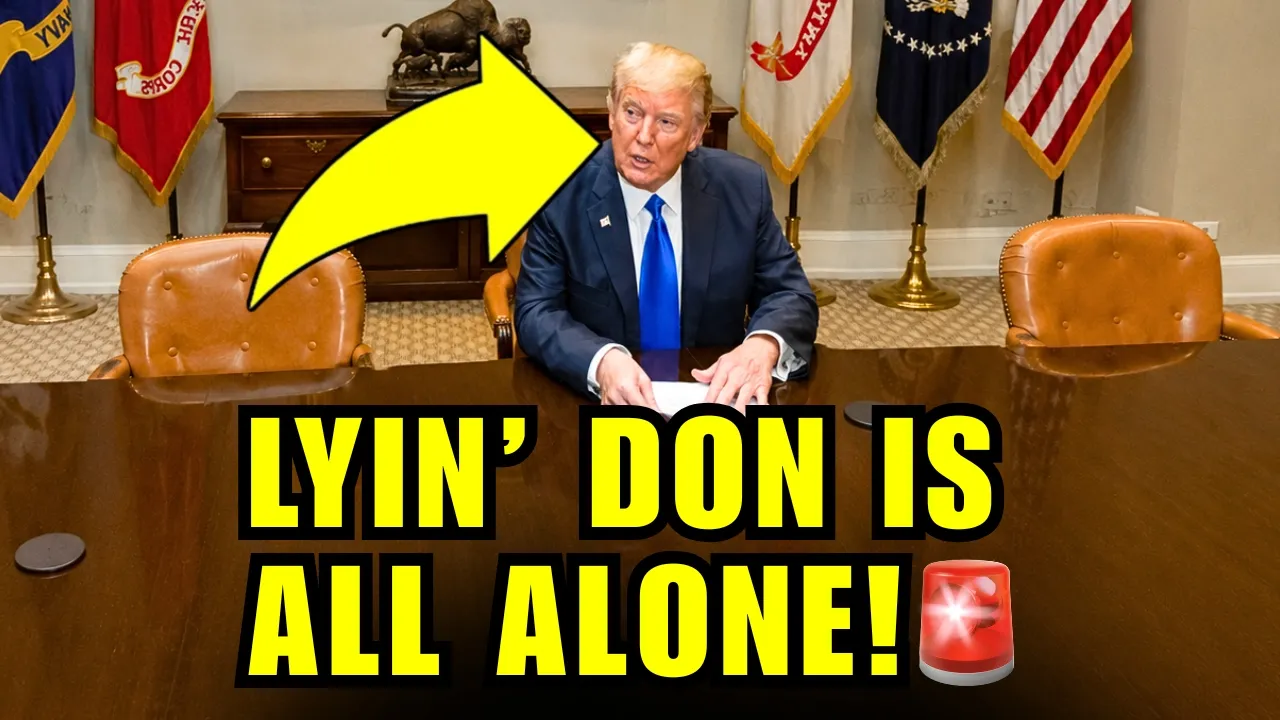
In a stunning turn of events that has left even seasoned political observers shaking their heads, Donald Trump has been caught red-handed spreading a completely fabricated celebrity endorsement. The former president took to his social media platform to share a glowing quote attributed to Hollywood icon Denzel Washington, praising Trump as the bravest, smartest, and most caring American president in history. There was just one problem: Denzel Washington never said any of it. The quote was a total fabrication, recycled from an old internet meme, and the swift debunking that followed has reignited questions about Trump's relationship with truth and his desperate need for validation from celebrities who want nothing to do with him.
The Fake Quote That Fooled the Former President
The controversy erupted when Trump posted a quote ostensibly from Denzel Washington that read: "He's never met anyone braver, smarter, or who cares more about America than Donald Trump. He's a great friend and even better president. I'm proud to be a steadfast supporter and I'll never apologize for it." The message was designed to appeal to Trump's base, suggesting that even a respected, apolitical Black Hollywood legend had seen the light and embraced the MAGA movement.
But almost immediately, fact-checkers and journalists began digging into the claim. Snopes, the leading fact-checking website, conducted an extensive search for credible evidence that Washington had ever uttered these words. What they found was nothing. Absolutely nothing. The quote was a complete fabrication, part of a long tradition of fake celebrity endorsements that circulate on social media and occasionally make their way into the mouths of politicians desperate for famous allies.
Snopes noted that the same quote had previously been attributed to actor Matthew McConaughey and musician Mick Jagger. In each case, the quote was equally fake. The fact-checking organization pointed out that if any actor of Washington's prominence had genuinely expressed such support for Trump, national and international entertainment and political outlets would have reported on it extensively. No such reporting exists because Washington never said it.
A Pattern of Fabricated Celebrity Support
This is not the first time Trump has claimed Denzel Washington as a supporter. During the 2016 presidential campaign, Trump asserted that he had received Washington's endorsement. That claim was immediately denied by Washington's publicist, who confirmed that the endorsement was a complete fabrication. Trump's supporters nevertheless spread the rumor across the internet, and it persisted for years despite the clear denial.
The pattern is telling. Trump has repeatedly claimed endorsements from celebrities who have never supported him, and in many cases, have actively opposed him. The list of fabricated or exaggerated celebrity endorsements is long and includes athletes, actors, and musicians who have publicly distanced themselves from the former president. Each time, the claims are debunked, yet the cycle repeats.
What makes this particular incident so striking is that it comes after years of Washington making his political views clear, often in thoughtful and nuanced ways that directly contradict the image of a Trump supporter. Washington has never been a partisan firebrand, but his public statements have consistently emphasized critical thinking, media literacy, and personal responsibility, values that stand in stark contrast to the misinformation and conspiracy theories that have become hallmarks of Trump's political movement.
Denzel Washington's Thoughtful Approach to Politics and Media
To understand why this fake endorsement is so absurd, one must understand Denzel Washington's actual views. In a series of interviews over the years, Washington has demonstrated a depth of thought and a commitment to nuance that makes the idea of him praising Trump in such grandiose terms laughable.
When asked during a 2016 interview about who he was supporting in the presidential election, Washington famously replied, "None of your business." He refused to be drawn into partisan politics, instead emphasizing the importance of personal engagement and community. When asked about race relations under President Obama, Washington offered a measured response that focused on human connection rather than political blame. "You can't legislate love," he said. "The President of the United States can't legislate us into liking each other. We have to step forward and ask questions about each other and engage."
Washington has also spoken candidly about the state of the media and the dangers of misinformation. In one memorable interview, he discussed the long-term effects of too much information and the polarization it creates. "One of the effects is the need to be first, not even to be true anymore," he said. "What a responsibility you all have to tell the truth, not just to be first, but to tell the truth. We live in a society now where it insists first. Who cares? Get it out there. We don't care who it hurts. We don't care who we destroy. We don't care if it's true. Just say it. Sell it."
Washington's words are almost prophetic in light of the fake endorsement debacle. He warned against the very behavior that Trump and his allies have normalized: spreading information without regard for truth, simply because it serves a narrative or generates attention.
The Psychology Behind Trump's Imaginary Friends
Why does Trump keep claiming endorsements from celebrities who have never supported him? The answer likely lies in a combination of factors, including his obsession with fame and status, his need for validation, and his understanding that celebrity endorsements can influence public perception.
Trump has long positioned himself as a celebrity president, a man of wealth and fame who moves in the same circles as Hollywood elites. The reality, however, is that most of those elites have rejected him. His attempts to claim their support are a way of maintaining the illusion that he is still admired by the cultural icons he once coveted as peers.
There is also a practical political dimension. Celebrity endorsements can sway voters, particularly those who are not deeply engaged in politics. By claiming that a beloved figure like Denzel Washington supports him, Trump hopes to signal to voters that his movement is mainstream, acceptable, and even admired by people they respect. When those claims are exposed as lies, it undermines his credibility, but the damage may not be immediate. Some supporters will believe the fake endorsements regardless of the evidence, a phenomenon known as motivated reasoning.
Finally, there is the simple fact that Trump has a long history of making things up. From the size of his inauguration crowd to the results of the 2020 election, he has demonstrated a willingness to assert falsehoods as facts, regardless of the evidence. The fake Denzel Washington quote is just the latest example of this pattern.
Snopes and the Fight Against Misinformation
The role of Snopes in debunking this fabrication cannot be overstated. In an era of rampant misinformation, fact-checking organizations serve a critical function. They provide a counterweight to the flood of false claims that circulate on social media, offering evidence-based assessments that help the public distinguish truth from fiction.
Snopes' analysis of the Denzel Washington quote was thorough and decisive. They noted that the quote had been recycled from earlier memes attributing it to other celebrities. They pointed out that no credible evidence existed to suggest Washington ever said anything remotely like it. And they emphasized that if he had, it would have been major news. The absence of such news is itself evidence that the quote is fake.
This is not the first time Snopes has debunked a Trump claim, and it will not be the last. The organization has become a target of criticism from Trump and his allies, who accuse it of bias. But the reality is that Snopes applies the same standards to all claims, regardless of political affiliation. Its findings are based on evidence, not ideology.
The Broader Implications for Political Discourse
This incident raises troubling questions about the state of political discourse in America. If a former president can spread a blatant lie about a celebrity endorsement and face no significant consequences, what does that say about the health of our democracy?
The answer is that we are living in a post-truth era, where facts matter less than feelings and where lies can spread faster than corrections. Trump's fake endorsement is not an isolated incident; it is part of a broader pattern of misinformation that has infected our politics. From climate change denial to election conspiracy theories, falsehoods have become a central feature of American public life.
Combating this trend requires more than fact-checking. It requires a commitment to media literacy, critical thinking, and accountability. It requires citizens who are willing to question what they see and hear, who seek out reliable sources, and who hold public figures accountable when they lie.
Denzel Washington, for his part, has already given us the tools we need. "Are you using your device or is your device using you?" he asked. "Can you put it down? Can you turn it off?" These are questions we should all be asking ourselves as we navigate a media landscape designed to provoke, distract, and misinform.
Conclusion: A Lie Too Far
Donald Trump's fake Denzel Washington endorsement is a humiliating exposure of a man who has lost touch with reality. It reveals a desperate need for validation, a willingness to lie without shame, and a profound disrespect for the American people, who are expected to believe whatever they are told.
Denzel Washington never said those words. He never endorsed Trump. He never called him a great friend or an even better president. The quote was a lie, fabricated by someone who wanted to create a false impression of support. And Trump, either knowingly or through his own gullibility, spread that lie to his millions of followers.
The swift debunking by Snopes and others is a reminder that facts still matter, that truth still matters, and that those who peddle lies will eventually be exposed. But exposure alone is not enough. We must demand better from our leaders. We must reject the politics of deception and embrace the politics of truth. And we must remember the wisdom of Denzel Washington: "Anything you practice, you'll get good at." If we practice believing lies, we'll get good at it. But if we practice seeking truth, we can build a better, more informed, and more just society.


0 Comments