A political firestorm erupted this week after late-night host Jimmy Kimmel aired a segment that directly challenged White House Press Secretary Karoline Leavitt’s claims about political rhetoric and violence. The controversy, which began with a joke at a parody White House Correspondents’ Dinner, escalated into a full-blown war of words involving President Donald Trump, First Lady Melania Trump, and ABC. What follows is a detailed examination of the timeline, the statements, and the media frenzy that has captivated Washington.
The Joke That Started It All
On Thursday, April 23rd, Jimmy Kimmel prepared his audience for the upcoming White House Correspondents’ Association Dinner by presenting a pre-taped comedy segment on Jimmy Kimmel Live. The segment was a parody of the annual event, complete with edited footage making it appear as though Trump administration officials were in the audience. During the sketch, Kimmel turned his attention to First Lady Melania Trump. He complimented her appearance, saying she looked beautiful, before adding a darker punchline: he said she had the kind of glow you might associate with an expectant widow.
The joke, framed around the age difference between Donald Trump and Melania, was met with mixed reactions from the studio audience. Some laughed, others groaned, but few could have predicted the chain of events it would set off. At the time, it seemed like just another late-night barb in a long tradition of political humor.
The Armed Incident at the Correspondents’ Dinner
Two days later, on Saturday, April 25th, Donald and Melania Trump attended the actual White House Correspondents’ Dinner at the Washington Hilton in Washington, D.C. During the event, an armed individual attempted to get past security outside the ballroom, transforming a formal evening into a frightening security emergency. Secret Service agents moved quickly to protect the President and First Lady, escorting them away from the immediate area while authorities took the suspect into custody.
According to reporting by the Associated Press, Trump was unharmed and no dinner guests suffered serious injuries. Federal prosecutors later charged the suspect with attempting to assassinate the president along with additional offenses. The incident naturally raised questions about security and political hostility, but it also became the spark for a much larger controversy.
Melania Trump and Karoline Leavitt Respond
On Monday morning, Melania Trump publicly criticized Kimmel, describing his remarks as hateful and violent and calling on ABC to take action. Soon afterward, Donald Trump entered the dispute himself, posting an extensive message on Truth Social in which he directly addressed Kimmel’s joke and described it as a disgraceful example of what he considered a call to violence. He then demanded that Disney and ABC immediately fire the comedian.
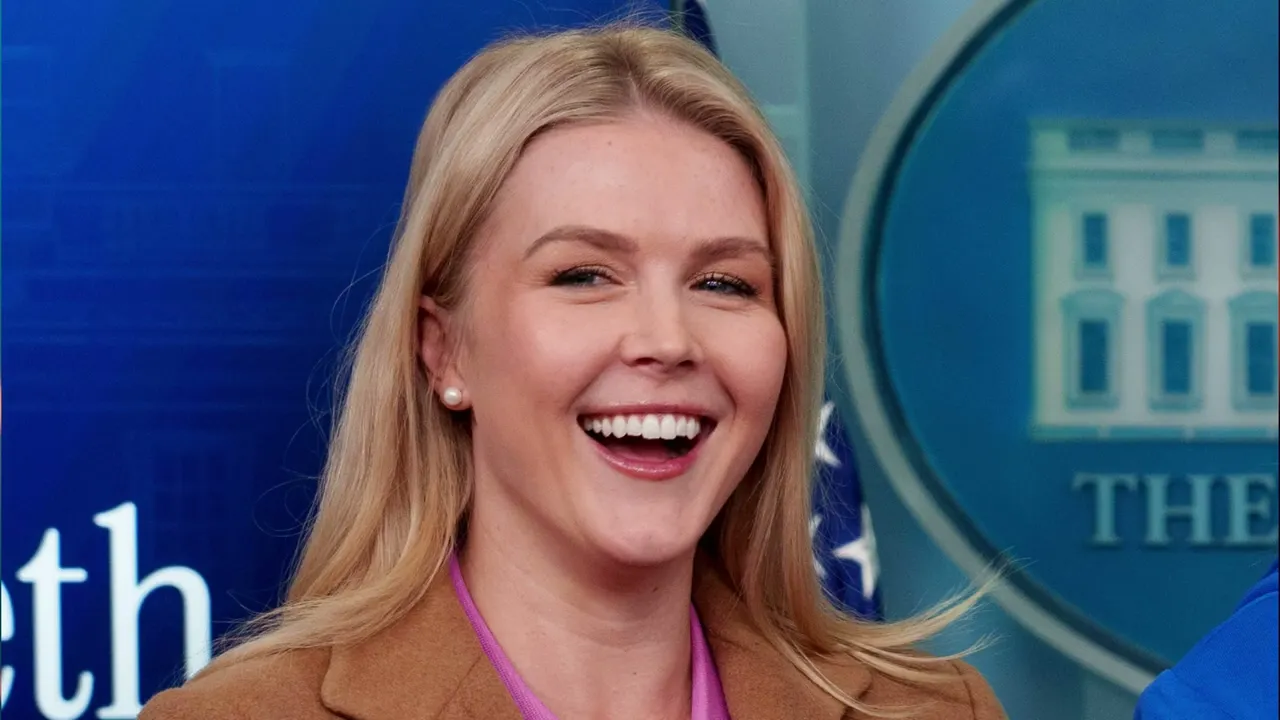
Later that same day, White House Press Secretary Karoline Leavitt pushed the argument further during a press briefing. Speaking to reporters, Leavitt said Americans should be able to disagree over politics without resorting to violence. But she went further, arguing that repeated descriptions of Trump as a fascist or a threat to democracy, along with comparisons to historical figures such as Adolf Hitler, were contributing to an increasingly hostile political environment. She referred to Democratic politicians and media personalities before specifically bringing Kimmel into the discussion.
Leavitt returned to his joke about Melania having the glow of an expectant widow and questioned why anyone would make a remark suggesting that a wife might appear to be anticipating her husband’s death. She presented the wider criticism directed at Trump and his family as extreme and unacceptable. In doing so, she made Kimmel’s comedy routine part of a larger debate about where political criticism ends, how humor should be interpreted, and what responsibility public figures have for the language they use.
Kimmel’s On-Air Rebuttal
Rather than delivering a lengthy speech or launching into a serious lecture, Kimmel let a video clip make his point. On his show, he aired footage of Leavitt speaking before the White House Correspondents’ Dinner, smiling as she discussed Donald Trump’s upcoming comedy performance. During her remarks, she said, “There will be some shots fired tonight.” The phrase was clearly figurative, setting the scene for the jokes and political humor that everyone expected to hear at the event.
Kimmel’s argument was not that Leavitt had caused the attack or that her words were responsible for what happened. Instead, he wanted viewers to consider how easily an ordinary figure of speech can be separated from its original setting and later presented as evidence of encouraging violence. The distinction matters because the meaning of a joke depends partly on its context, its audience, and the circumstances in which it was delivered.
By replaying Leavitt’s own words, Kimmel highlighted what he saw as a double standard. He had used similarly dark figurative language in a comedy routine just two days earlier, and now that same kind of language was being treated as a serious threat. The segment was a direct takedown of the Press Secretary’s claims, and it did not go unnoticed by the President.
Trump’s Eruption and the Demand for Firing
Trump responded with fury. In his Truth Social post, he called Kimmel’s joke a disgrace and demanded that Disney and ABC fire the comedian immediately. This was not simply a case of social media users exaggerating a political dispute or turning a celebrity controversy into a sensational headline. Trump himself publicly named Kimmel, condemned the joke, and called for his termination.
The President’s intervention escalated the situation from a media spat into a national controversy. It also raised questions about the boundaries between comedy and political speech, and whether a sitting president should be in the business of demanding the firing of a late-night host. The story dominated cable news for days, with commentators on both sides weighing in.
Analyzing the Timeline and the Evidence
To understand the controversy, it is essential to separate several different questions. First, there is the question of taste: was Kimmel’s joke funny, offensive, or simply unsuccessful? That is a matter of personal judgment. Second, there is the question of causation: did the joke contribute to the armed incident? The publicly available evidence does not establish that connection. CBS News reported that the alleged attacker had written material indicating a desire to target officials in the Trump administration, but those details were relevant to the investigation, not to Kimmel’s comedy routine.
The timeline is also important. Kimmel made the joke on April 23rd. The armed incident occurred on April 25th. Leavitt’s “shots fired” comment was made at the dinner itself, before the attack. These facts suggest that the attempt to link Kimmel’s words to the violence is tenuous at best. What is clear is that political rhetoric has become increasingly heated, and both sides are quick to accuse the other of fomenting violence.
- April 23: Kimmel airs parody segment with the “expectant widow” joke.
- April 25: Armed incident at the White House Correspondents’ Dinner.
- April 27: Melania Trump and Karoline Leavitt publicly criticize Kimmel; Trump demands his firing.
- April 28: Kimmel responds on air with Leavitt’s own “shots fired” clip.
The Broader Debate on Political Speech
This controversy is about more than just one joke. It touches on fundamental questions about freedom of expression, the role of comedy in a democracy, and the responsibility of public figures. Leavitt argued that repeated extreme criticism of Trump creates an environment where disturbed individuals might be pushed toward violence. Kimmel countered by showing that similar language is used casually by politicians on all sides, including Leavitt herself.
The episode also highlights the power of media framing. A sound bite can be lifted from its context and presented as evidence of something far more sinister. In the age of social media and partisan news, that is a dangerous dynamic. It is up to viewers to seek out complete video clips, follow the timeline carefully, and pay attention to what people actually said.
Conclusion: A Controversy That Won’t Die
Donald Trump’s demand for Jimmy Kimmel’s firing has turned a late-night joke into a political litmus test. The White House has framed the issue as a matter of decency and public safety, while Kimmel and his supporters see it as an attempt to silence criticism through false equivalence. The truth, as is often the case, lies somewhere in between. What remains undeniable is that the episode has exposed deep divisions in American political culture and raised uncomfortable questions about the power of words.
As the story continues to develop, one thing is certain: neither side is backing down. Trump has made it clear he expects ABC to act, and Kimmel has shown he is willing to fight back with the same tactics used against him. For now, the battle over comedy, politics, and violence is far from over.


0 Comments