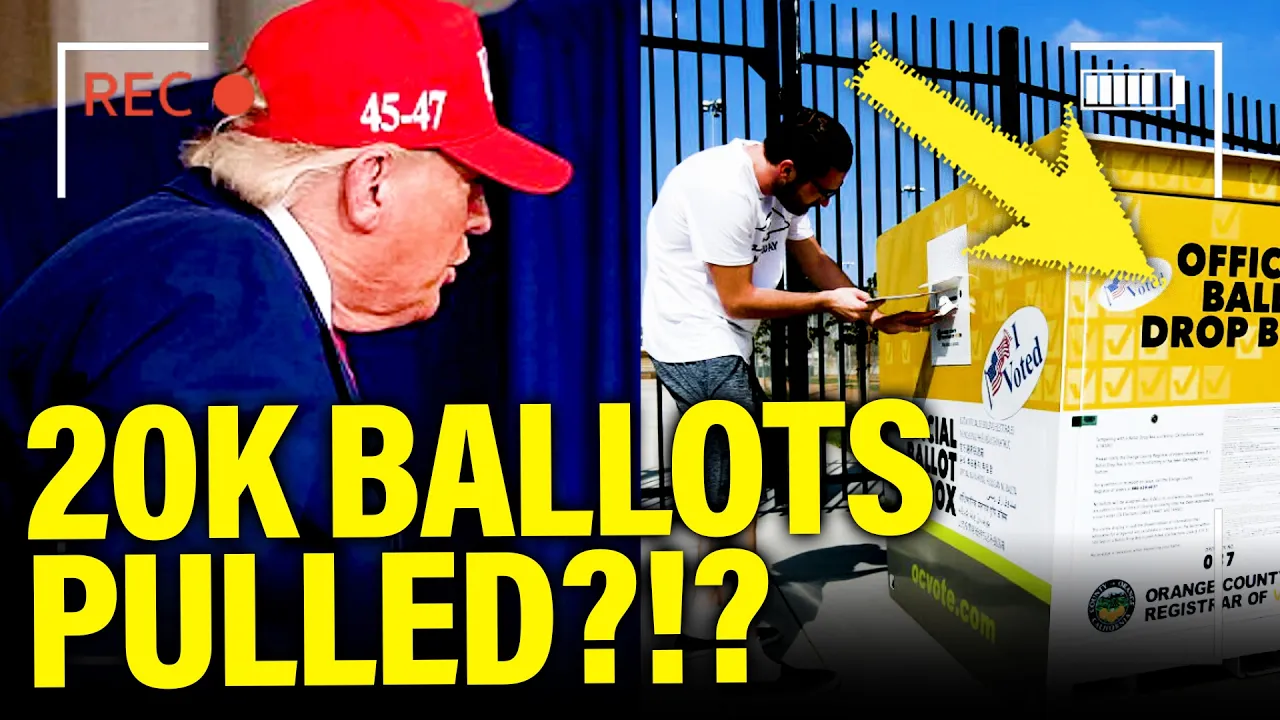
In an unprecedented move that has sent shockwaves through the political landscape, the Department of Justice under former President Donald Trump has asked a federal judge to block California from counting 20,000 ballots in the upcoming midterms. This extraordinary request, made mere weeks before the election, has raised alarm bells about the integrity of American democracy and the potential for voter suppression on a massive scale.
The Legal Battle Over 20,000 Ballots
The DOJ claims that these 20,000 individuals are non-citizens and therefore ineligible to vote. However, they have provided zero evidence to back up this assertion. California Secretary of State Shirley Weber has pushed back, accusing the DOJ of trying to sow chaos in the electoral process. The timing is particularly suspicious: federal law prohibits systemic voter purges within 90 days of an election, a deadline that passed on August 5th. This law exists to prevent mistakes that could disenfranchise eligible voters. Yet, the DOJ appears to be attempting to circumvent this very law.
The state of California is standing firm. Governor Gavin Newsom condemned the move as "more dangerous nonsense from a president losing his grip on reality." He emphasized that California's elections are not Trump's to control and vowed to ensure every eligible voter can participate in a free and fair election. The conflict raises fundamental questions about states' rights and federal overreach in the electoral process.
The Nevada Precedent: A Cautionary Tale
If California needed a reason to be wary, Nevada provides a glaring example. In a similar situation, Homeland Security Secretary Mark Wayne Mullen announced that nearly 16,000 non-citizens were on Nevada's voter rolls. However, that number was quickly reduced to 185, and upon further investigation, zero of those individuals were actually non-citizens. This fiasco highlights the incompetence and potential recklessness of the DOJ's claims. It also raises concerns about racial profiling, reminiscent of ICE stops that have been criticized in the past.
The Heritage Foundation, a conservative think tank, conducted its own research and found only 99 cases of non-citizen voting since 2000. This minuscule number underscores the absurdity of the DOJ's claim that 20,000 non-citizens are set to vote in California. The round number itself is suspicious; how could the DOJ perfectly identify exactly 20,000 individuals without providing any evidence? The lack of transparency is troubling.
The Thumb Drive Fiasco: Incompetence or Intent?
The DOJ's methods have been described as haphazard at best. They reportedly sent a thumb drive to the Secretary of State's office with a post-it note containing the password. This grossly inadequate security measure was rightly rejected by California officials, who refused to plug an unknown device into their systems. The DOJ then waited only 48 hours before filing the lawsuit, giving California virtually no time to review the list. This rushed approach suggests that the goal was not to ensure election integrity but to create confusion and distrust.
Such tactics are reminiscent of authoritarian regimes, where the rule of law is weaponized to suppress opposition. The DOJ under Trump has consistently shown a willingness to bend the rules, and this case is no exception. The fact that they are targeting a state with a large Democratic lean and several competitive congressional districts is unlikely to be a coincidence.
The Supreme Court's Role and the Future of Voting Rights
This case may ultimately end up before the Supreme Court, which has already shown a willingness to revisit voting rights protections. The Court has taken up a case from Arizona that could undermine the federal law preventing voter purges within 90 days of an election. If the Court sides with Arizona, it could pave the way for similar purges nationwide, potentially disenfranchising thousands of eligible voters.
The 90-day rule exists for a reason: it is nearly impossible to verify each voter's eligibility individually without risking mistakes that could disenfranchise legitimate voters. Systemic purges close to elections are a recipe for chaos and error. The DOJ's actions in California are a clear attempt to exploit this vulnerability and undermine confidence in the electoral system.
Conclusion: A Threat to Democracy
The DOJ's move to block 20,000 ballots in California is not about ensuring election integrity; it is about sowing chaos and suppressing votes. The lack of evidence, the rushed timeline, and the dubious methods all point to a political motive. As the midterms approach, it is crucial to remain vigilant and hold those in power accountable. The right to vote is the cornerstone of democracy, and any attempt to undermine it must be resisted.
California officials have vowed to fight this in court, and the nation will be watching closely. The outcome of this case could have far-reaching implications for future elections. In the meantime, it is essential to stay informed, speak out against injustice, and protect the democratic process for all Americans.


0 Comments