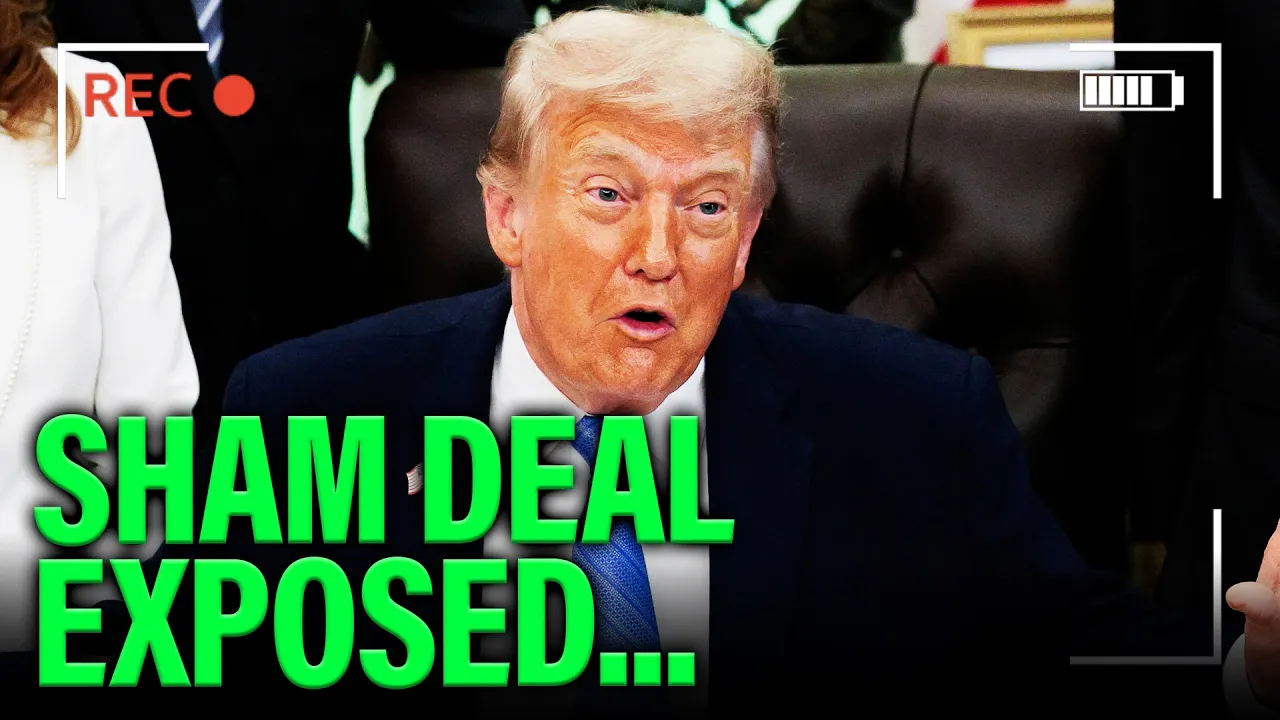
In a stunning series of moves that have legal experts and international observers reeling, Donald Trump has simultaneously violated a federal law banning Russian oil imports and launched an unprecedented attack on the International Criminal Court (ICC). This dual assault on legal norms and global alliances raises serious questions about the administration's commitment to the rule of law and its increasingly isolated stance on the world stage.
The Illegal Russian Diesel Deal
At the heart of the controversy is Trump's announcement that the United States will import 300,000 tons of Russian diesel this month, with plans to increase to 500,000 tons next month and potentially one million tons thereafter. This directly contravenes the Ending Importation of Russian Oil Act of 2022, which prohibits such imports unless Russia withdraws its forces from Ukraine and poses no threat to NATO.
The law, passed with bipartisan support, allows the president to lift the ban only if Russia has ceased military hostilities in Ukraine and withdrawn its troops, or if it is certified as posing no immediate military threat to any NATO member. Neither condition has been met. In fact, Russia continues its aggressive war in Ukraine and has made no moves to de-escalate.
Legal analysts point out that Trump's move is not only unlawful but also appears to be a deliberate provocation. The first shipment of 275,000 barrels of Russian diesel, carried by a Greek-flagged tanker, is set to arrive on the East Coast imminently. This amount, while symbolically significant, is minuscule compared to global oil trade—equivalent to a few hours of U.S. diesel consumption. It will have no meaningful impact on prices, despite Trump's claims that he is addressing an energy crisis.
Instead, the deal seems designed to send a message: that Russian oil refineries are under the protection of the Trump regime. As Ukraine continues to strike Russian refineries, Trump's action could be used as a pretext to withdraw military support for Ukraine. Already, the administration has refused to provide promised interceptors and critical weapons to Kyiv.
The ICC Designation: A Rogue Court?
In a separate but equally alarming development, the Trump administration has imposed severe sanctions on the International Criminal Court, effectively designating it as a rogue entity. Secretary of State Marco Rubio declared, "Either the ICC will end its threats or we will end the ICC," and vowed to dismantle the court "piece by piece" until Americans are no longer threatened.
The sanctions block the ICC from using the U.S. dollar, prohibit U.S. persons from providing funds, goods, or services to the court, and freeze any assets under U.S. jurisdiction. This could cripple the court's ability to pay its employees and conduct operations, given the centrality of the dollar to global finance.
The timing is telling. The sanctions were announced shortly after former ICC judge Navi Pillay won the Nobel Peace Prize. Pillay, a highly respected human rights jurist, chaired the UN Human Rights Commission that determined genocide was occurring in Palestine. The Trump administration has been vocal in its criticism of the ICC's arrest warrant for Israeli Prime Minister Benjamin Netanyahu, and the sanctions appear to be retaliation for the court's pursuit of justice.
The international reaction was swift. Allies including Canada, Japan, Germany, and the Netherlands issued a joint statement reaffirming their support for the ICC and rejecting the U.S. approach. They pledged to deepen their cooperation with the court, isolating the United States further.
Contradictions and Hypocrisy
The administration's actions reveal a glaring hypocrisy. While imposing the harshest sanctions on the ICC, Trump has simultaneously removed sanctions on Russia. The recently passed Lindsey Graham Sanctions Act, which was supposed to increase pressure on Russia, has been effectively ignored. Instead, Trump has interpreted the law to mean he can remove sanctions, while sanctioning the ICC.
Furthermore, Trump has used the pretext of Russian diesel purchases to impose tariffs on allies like India, while his own administration is now importing Russian diesel. This comes after Trump spent years criticizing European countries for buying Russian energy, even as countries like Hungary and Slovakia—led by leaders friendly to Putin—continued to do so.
The claim of "energy independence" rings hollow when the U.S. is turning to Russia for oil. Moreover, Russia is supporting Iran, which is fighting a proxy war against U.S. interests, and the funds from oil sales bolster Russia's war machine against Ukraine. Trump's actions thus indirectly fund both conflicts.
The Take Care Clause and the Rule of Law
At the core of these controversies is the Constitution's Take Care Clause, which obligates the president to "take care that the laws be faithfully executed." Trump's blatant violation of the Russian oil ban and his selective enforcement of sanctions laws undermine this foundational principle.
Legal scholars note that the entire U.S. constitutional system relies on good faith—the expectation that the president will uphold the law, even when inconvenient. Trump's pattern of behavior, from the Epstein files to the Russian oil deal, suggests a disregard for this obligation. His history of breaching contracts and acting in bad faith raises doubts about his willingness to adhere to any legal constraints.
For those who value the rule of law, these developments are deeply troubling. The administration's actions are not just political; they are an assault on the legal order that underpins American democracy and international stability.
Conclusion
Donald Trump's illegal importation of Russian diesel and his attack on the International Criminal Court are not isolated incidents but part of a broader pattern of undermining legal norms and alliances. By prioritizing personal grievances and authoritarian tendencies over the rule of law, the administration is isolating the United States and emboldening adversaries.
The coming months will likely see legal challenges to the Russian oil deal, with the administration arguing the case is moot because the oil has already arrived. But regardless of the outcome, the damage to America's credibility and commitment to justice is already done. As former Secretary of State Hillary Clinton warned, the U.S. under Trump is "not a serious nation anymore" but "a deeply dangerous nation." The world is watching, and the consequences will be felt for years to come.


0 Comments