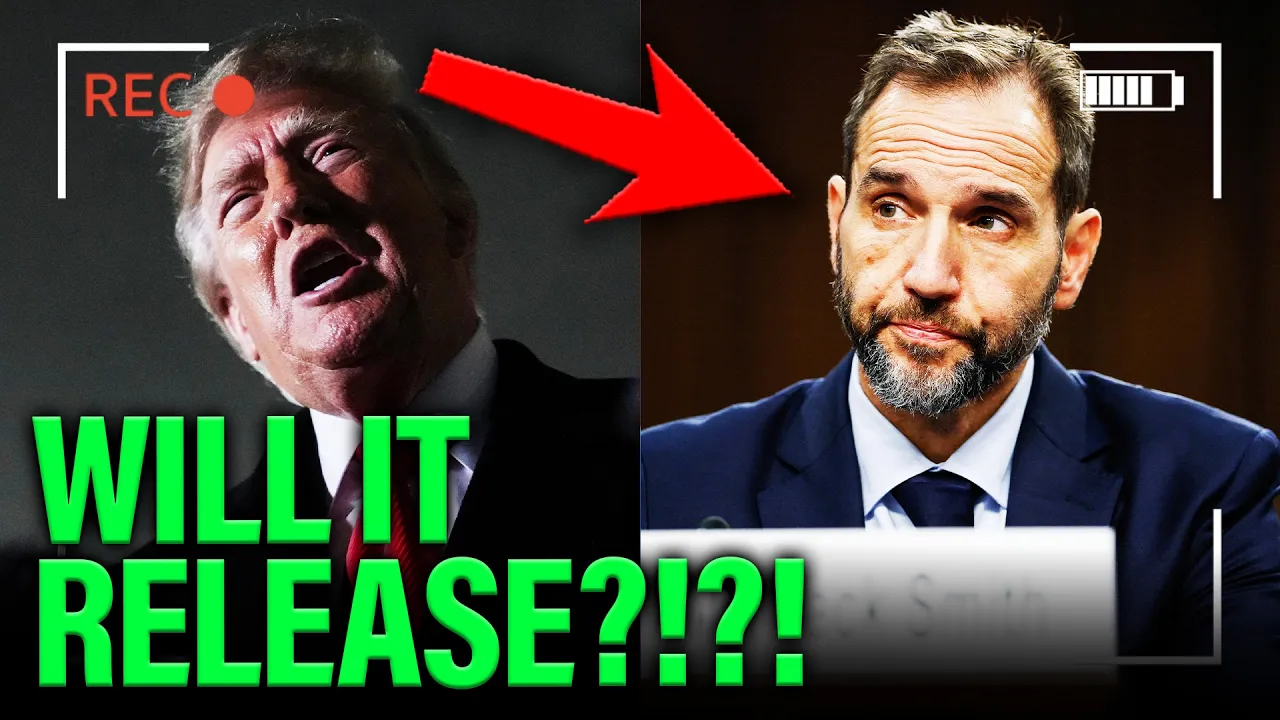
In a stunning turn of events, the 11th Circuit Court of Appeals has indefinitely postponed oral arguments on the release of Volume Two of Jack Smith's final report on the classified documents investigation into Donald Trump. The delay, originally scheduled for November 2nd—the day before the midterm elections—means the American public will head to the polls without yet another reminder of the serious allegations against the former president.
The report, which details findings about Trump's handling of highly classified documents at Mar-a-Lago, remains non-public, sparking outrage among transparency advocates. The decision to delay has been met with disappointment and frustration, raising questions about political interference and the public's right to know.
Background: The Classified Documents Investigation
The investigation into Donald Trump's handling of classified documents began after the National Archives discovered that numerous classified records were missing from their proper location. In August 2022, the FBI executed a search warrant at Mar-a-Lago, recovering over 100 classified documents. Jack Smith was appointed as special counsel to oversee the investigation, which culminated in a report divided into two volumes.
Volume One, concerning the election interference case, was released to the public. Volume Two, focusing on the classified documents case, has been withheld under an injunction issued by Judge Aileen Cannon. This makes it the only special counsel report in U.S. history not to be made public, according to Scott Wilkins, senior counsel for the Knight First Amendment Institute.
The Knight First Amendment Institute, along with other transparency organizations, has been fighting to release Volume Two, arguing that the public has a right to know the findings of an investigation into the character of the nation's highest elected official. The 11th Circuit's delay is a significant setback in that fight.
The Legal Battle: Why the Delay Matters
The 11th Circuit's decision to postpone oral arguments came after Trump and his co-defendants, Walt Nauta and Carlos De Oliveira, filed a last-minute motion for a continuance, citing the need for Trump to consult with his lawyer. The court granted the delay, but did not set a new date, leaving the release of the report in limbo.
Scott Wilkins, who has been closely involved in the litigation, expressed his disappointment: "This is an incredibly important report to get out to the public. It concerns information of the highest importance to the public. This is about the character of the current president and former president, and it's imperative that this appeal be heard as soon as possible."
The delay also has implications for other legal proceedings. A grand jury in Fort Pierce, Florida, overseen by Judge Cannon, is investigating the so-called "grand conspiracy" and has issued subpoenas to former FBI agents involved in the Mar-a-Lago search. These agents have raised concerns that testifying about material covered in Volume Two could violate Judge Cannon's order, which prohibits the release of the report to anyone outside the Department of Justice.
This creates a Catch-22: the agents cannot testify without potentially violating the order, and the public cannot learn the contents of the report until the injunction is lifted. As Wilkins noted, "It's hard to imagine how they could comply with these subpoenas and give grand jury testimony with Judge Cannon's order in place."
Judge Cannon's Injunction: A Moving Target
Judge Cannon's initial injunction, issued in January 2025, was based on the potential threat to the fair trial rights of Nauta and De Oliveira, whose cases were still pending on appeal. However, just three weeks later, the cases against them were dismissed, eliminating the basis for the injunction. Yet the injunction remained in place.
In February 2026, Judge Cannon replaced the original injunction with a new permanent injunction, citing new reasons. According to Wilkins, these new reasons "don't provide any justification for withholding the report." Notably, before the 11th Circuit, Trump and his co-defendants have made no attempt to defend these new reasons; instead, they argue that the Knight Institute and others cannot challenge the injunction.
This shifting rationale has raised eyebrows among legal experts, who see it as a blatant attempt to stonewall the release of damaging information. The fact that the only special counsel report in history to be withheld is one concerning Donald Trump is not lost on observers.
The Political Context: Midterms and Public Perception
The timing of the delay is particularly suspicious. The oral arguments were originally scheduled for November 2nd, the day before the midterm elections. With the delay, voters will not have the benefit of knowing the details of the report as they cast their ballots. This could have significant implications for the political landscape, as the report might contain information that could influence public opinion about Trump and his allies.
Critics argue that the delay is a deliberate attempt to avoid further damaging revelations before the elections. Trump has repeatedly dismissed the investigations as politically motivated, but the evidence suggests otherwise. The classified documents case is just one of several legal challenges facing the former president, and the public has a right to know the findings.
The Knight First Amendment Institute has argued that the urgency of the relief sought should weigh heavily against further delays. In a statement to the court, they wrote: "Appellants seek public access to a document of singular historic importance, one that concerns the character of the nation's highest elected official, and this court has already recognized the urgency of the relief they seek."
What's Next? The Road to Transparency
Despite the setback, Wilkins remains hopeful that the oral argument will happen relatively soon. The defendants had sought a delay until January or thereafter, but the court granted their motion only in part, indicating that it is trying to find an earlier time for the argument.
In the meantime, the Knight First Amendment Institute continues to fight for transparency. They are urging the public to stay informed about the litigation and to support efforts to release the report. As Wilkins noted, "Until this injunction is lifted, it's hard to see how the information in the report could become public."
There are other potential avenues for transparency, including congressional investigations and the grand jury proceedings in Florida. However, these are complicated by Judge Cannon's injunction, which remains a formidable barrier.
The American people deserve to know the truth about the classified documents investigation. The delay in releasing Volume Two is a blow to transparency and accountability, but the fight is far from over. As the legal battle continues, one thing is clear: the public's right to know cannot be silenced forever.
Conclusion: A Test of Democracy
The postponement of oral arguments in the 11th Circuit is a stark reminder of the lengths to which some will go to keep damaging information from the public. The fact that this is the only special counsel report in history not to be released speaks volumes about the unprecedented nature of the situation.
As the midterm elections approach, voters should demand transparency and accountability from their leaders. The release of Volume Two is not just about Donald Trump; it's about the integrity of the justice system and the public's right to know. The delay is a temporary victory for those seeking to stonewall, but the pursuit of truth will continue.
The Knight First Amendment Institute and other transparency advocates will keep fighting, and eventually, the full report will see the light of day. Until then, the American people must remain vigilant and informed. The stakes are too high to do otherwise.


0 Comments