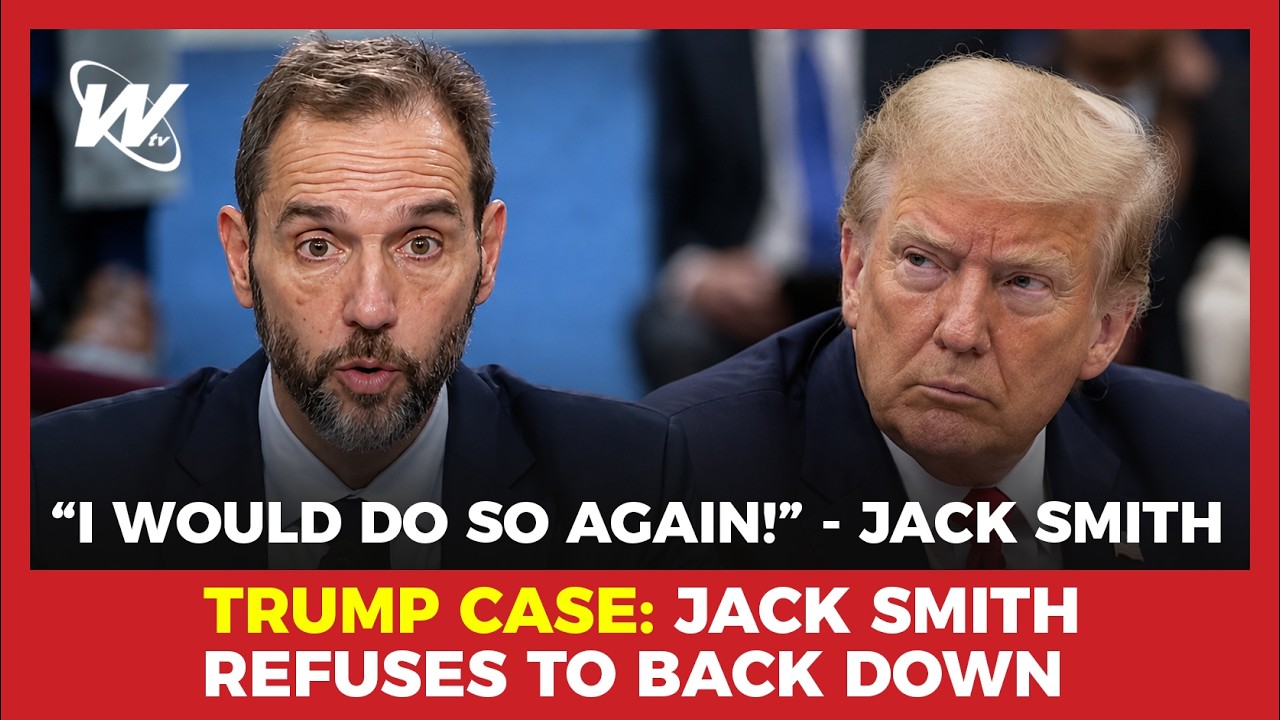
In a riveting Senate hearing, former special counsel Jack Smith delivered six words that cut through the political noise: "I am not a politician and I have no partisan loyalty." This declaration set the tone for a testimony that not only defended his investigation into Donald Trump but also raised profound questions about the rule of law in America.
The Principle of Equal Justice
Smith began by emphasizing that a prosecutor's decisions must be based solely on facts and law, regardless of the subject's status or political affiliation. He stressed that the law should not bend for the wealthy or powerful, and that ordinary Americans would not expect an investigation to halt simply because someone runs for office.
This principle, he argued, applies equally to Democrats and Republicans. "Equal justice means very little if it only applies to people without political influence," he said, drawing applause from some quarters and criticism from others.
Defending the Charges Against Trump
Smith stood by his decision to bring charges against Trump, asserting that his team developed proof beyond a reasonable doubt of serious crimes. He claimed he would have pursued the same course regardless of the president's party. However, he acknowledged the distinction between his assessment and a jury verdict, noting that the cases never reached trial.
The charges stemmed from alleged efforts to overturn the 2020 election and the retention of classified documents at Mar-a-Lago. Smith described highly sensitive national security information stored in a bathroom and ballroom, raising concerns about accessibility and security.
The Threat to the Rule of Law
Smith warned that the rule of law faces unprecedented challenges, citing threats of prosecution against individuals perceived as opposing the president. He revealed that he himself had been threatened with jail by the president, yet expressed confidence that the system would endure because of dedicated public servants.
He criticized the vilification of his team and the pressure on prosecutors, arguing that while oversight is legitimate, intimidation and political revenge are not. "Fear may be contagious, but courage is as well," Smith concluded.
Analysis: Beyond the Headlines
Smith's statement raises three key takeaways. First, no one should be above the law, but prosecutors must also avoid targeting political opponents. Second, allegations are not convictions; the trial process is essential. Third, institutional independence is crucial, and threats against prosecutors undermine justice.
The hearing underscored the deep political divisions in the country and the importance of adhering to principles over party loyalty. As Smith's testimony continues to reverberate, it serves as a reminder that the justice system must remain impartial and resilient.
Conclusion
Jack Smith's opening statement was more than a defense of his actions—it was a call to uphold the rule of law above political considerations. Whether one agrees with his decisions or not, the principles he articulated are fundamental to American democracy. The challenge now is to ensure that those principles are applied consistently, regardless of who occupies the White House.


0 Comments