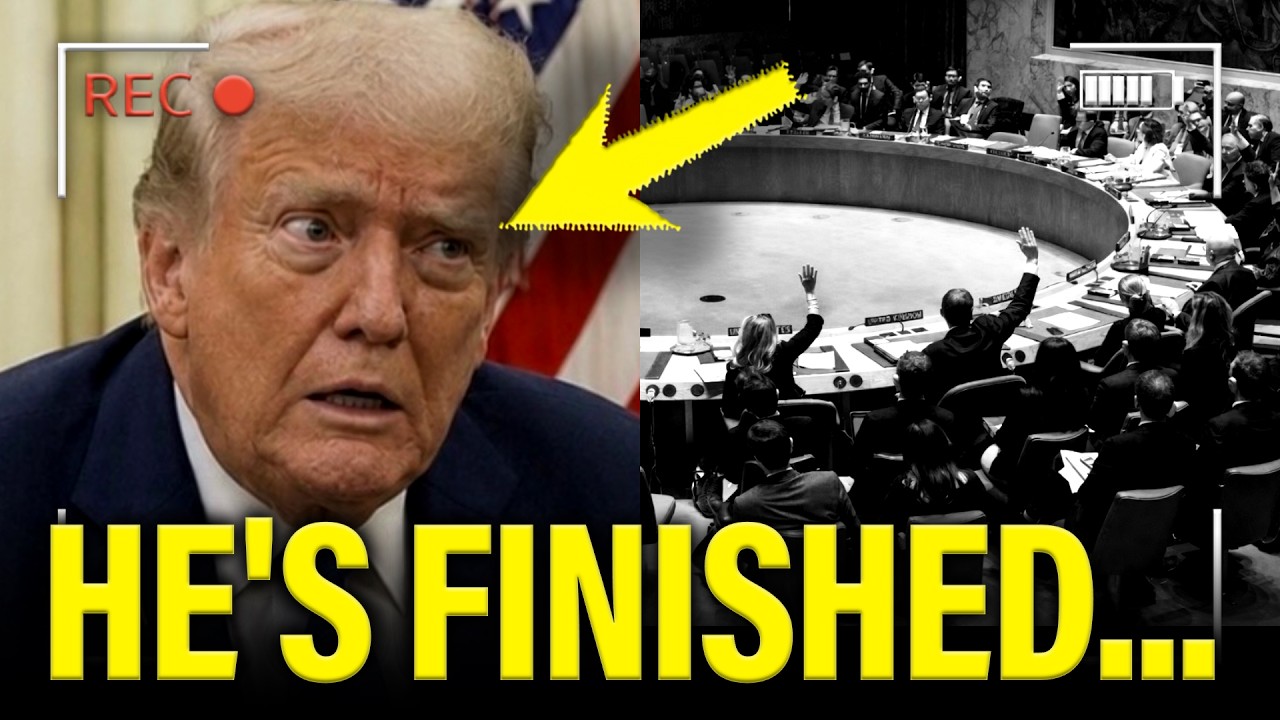
A Diplomatic Meltdown at the United Nations
The chamber of the United Nations General Assembly rarely witnesses raw, personal confrontation. But this week, the world saw a startling exception. US Ambassador to the UN, Mike Wall, erupted in a furious verbal assault on Cuba's foreign minister, Bruno Rodríguez Parrilla, shouting 'BACK UP' and physically gesturing for him to retreat from the podium. The outburst, captured on camera and broadcast globally, was a shocking breach of diplomatic protocol—a moment that would quickly define America's standing on the world stage.
Yet the shouting was only the prelude to a far more consequential event: a vote that would expose the United States' deepening isolation. In a lopsided tally of 130 to 17, the UN General Assembly voted to condemn the United States' unlawful economic blockade of Cuba. The numbers were unmistakable. Washington had lost decisively, and its ambassador's defiant celebration of the outcome only underscored the disconnect between reality and rhetoric.
The Blockade Vote: A Referendum on US Policy
The annual UN resolution condemning the US embargo on Cuba has long been a ritual of international criticism, but the margin this year was particularly stark. Of the 193 member states, 130 voted in favor of the condemnation, 17 opposed, and the remainder abstained or were absent. The United States, along with a small handful of allies—primarily Israel and a few Pacific island nations—stood virtually alone.
Ambassador Wall, however, framed the outcome as a victory. In a statement posted online, he claimed that 'nearly triple the number of nations voted no, abstained, or just chose not to vote,' and accused Havana of peddling 'sham' propaganda. He celebrated the world 'pushing back on the Cuban regime' and even posted a photo of himself making a dismissive gesture. The disconnect between the vote count and the ambassador's spin was immediate and glaring. Critics pointed out that losing 130 to 17 is not a moral victory—it is a rout.
The blockade itself, in place for over six decades, has been repeatedly condemned by the UN as a violation of international law and a humanitarian catastrophe for Cuban civilians. This year's vote, with its overwhelming majority, sent a clear message: the world is tired of America's unilateral coercion. For the Trump administration, however, the loss was not a moment for reflection but for doubling down.
Ambassador Wall's Tirade and the Cuban Response
The confrontation inside the UN chamber was as symbolic as it was shocking. During his speech, Ambassador Wall held up photographs of Fidel Castro wearing a Rolex watch and of opulent homes allegedly owned by the Castro family. He used these props to attack the Cuban government's wealth while its people suffer, and he appeared to call for an uprising against the Cuban regime. The Cuban delegation objected fiercely, citing ad hominem attacks and incitement to violence.
Moments later, when Foreign Minister Rodríguez approached the podium, Wall began shouting. 'This individual needs to back away from this podium,' he bellowed. 'BACK UP. WE ARE DEALING WITH AMERICA. BACK UP.' The Cuban minister stood his ground, but the damage was done. The scene—a US official physically intimidating a foreign diplomat on international territory—was broadcast worldwide. Rodríguez later denounced the 'disrespectful, provocative attitude' of the US delegation, citing 'harassment and unconsented filming' by American officials and the involvement of UN security personnel. He called the behavior incompatible with 'decorum, respect for personal dignity and privacy.'
The incident marked a new low in US-Cuba relations and raised serious questions about the professionalism of the Trump administration's diplomatic corps. Ambassador Wall's behavior was not merely rude—it was a violation of the norms that make multilateral dialogue possible.
Russia Vetoes US Resolution on Western Sahara
On the same day as the Cuba vote, another diplomatic blow landed at the UN Security Council. Russia vetoed a US-drafted resolution on Western Sahara that would have scaled back the military component of the UN peacekeeping mission and cemented Morocco's autonomy plan as the only basis for negotiating a political settlement to the 50-year-old conflict. The resolution had the backing of 11 Security Council members, but Russia's veto killed it.
Ambassador Wall responded with characteristic defiance, posting that 'Russia just vetoed the US resolution backed by 11 security council members. We must not fall back on a status quo that condemns refugees to another five decades in the camps.' Yet the irony was hard to miss: just days earlier, the Trump administration had invited Russia's Foreign Minister Sergey Lavrov to Atlanta for the G20 foreign ministers meeting—a red-carpet reception for the same government that had just torpedoed a key US initiative.
Lavrov in Atlanta: A Warm Welcome for a Rival
The G20 ministerial in Atlanta became the stage for another symbolic rebuke to US influence. Foreign Minister Lavrov was seen meeting with Saudi Arabia's foreign minister on the sidelines, discussing regional security and 'transforming the security architecture in the Middle East.' According to reports, the talks focused on pushing the United States out of the region as local powers take greater control.
The optics were extraordinary: Russia, under heavy US sanctions, was being welcomed on American soil while coordinating with Middle Eastern allies to diminish US influence. The Trump administration's decision to host Lavrov—despite his role in undermining US diplomatic efforts—was seen by critics as another example of the administration's incoherent foreign policy. Germany's foreign minister, upon Lavrov's arrival, declared: 'There will be no family photo featuring our European partners together with Mr. Lavrov. There is no normality with Russia. We must not send false visual signals.'
The contrast between the US ambassador's shouting match at the UN and the cordial reception for Lavrov in Atlanta could not have been sharper. America's diplomacy appeared to be lurching between aggression and accommodation, with little strategic coherence.
Trump's Controversial UN Pick: Viktor Orbán
As if to underscore the administration's break with multilateral norms, reports emerged that the Trump regime was pushing for Hungary's recently defeated authoritarian leader, Viktor Orbán, to become the next UN Secretary-General. The proposal was met with disbelief and derision. Hungary's new prime minister, Péter Magyar, said appointing Orbán would mean 'the destruction of the United Nations.' Poland's Prime Minister Donald Tusk remarked, 'I haven't even heard about this... Is this some sort of joke?' Poland's foreign minister added that Warsaw would not support Orbán's candidacy.
The idea of installing a leader known for dismantling democratic institutions at the helm of the world's premier multilateral body was widely seen as a provocation—or a farce. For many diplomats, it confirmed that the Trump administration viewed the UN not as a forum for cooperation but as a battleground for ideological warfare.
Canada and the EU Forge a New Partnership
While the US was alienating allies at the UN, Canada was moving in the opposite direction. In Montreal, Prime Minister Mark Carney met with European Council President António Costa and European Commission President Ursula von der Leyen to announce that Canada would become an associate member of the European Union—a first-of-its-kind arrangement that stops just short of full membership.
'Canada being an associate member of the European Union creates opportunity that starts with our young people,' Carney said. 'Through this program, a Canadian student can pursue their studies in Barcelona just as easily as they could at McGill.' The agreement includes expanded participation in Erasmus Plus and closer political and economic coordination. Costa called it 'the closest, deepest and most unique' partnership of its kind, 'everything short of a full EU membership.'
The move was a direct response to the Trump administration's attacks on Canadian sovereignty and its disruption of global trade. As the US retreats from multilateralism, its closest neighbor and ally is pivoting toward Europe. The message was unmistakable: if America abandons its allies, they will find new ones.
Global Authoritarian Network and the Pushback
The Trump administration's foreign policy has increasingly aligned with a network of authoritarian leaders—Viktor Orbán in Hungary, Jair Bolsonaro's allies in Brazil, Nayib Bukele in El Salvador, and others. This 'globalist authoritarian network,' as critics call it, works to undermine democratic norms and multilateral institutions.
In Brazil, Flávio Bolsonaro released a video from Florida claiming the elections were rigged and that he is the 'real leader,' vowing to lead opposition from abroad. In Venezuela, Trump's ally Deli Rodríguez refused to commit to a timeline for elections. In Albania, protests turned violent against Prime Minister Edi Rama, who had handed over the Sazan Islands to Jared Kushner and Ivanka Trump. Opposition lawmakers lit flares inside parliament, demanding Rama's resignation. In El Salvador, President Bukele deployed 2,000 troops to Haiti, backed by the Trump regime—a move seen as an invasion.
Meanwhile, the Trump administration agreed to provide $35 million in military aid to a Cameroonian unit accused of war crimes in exchange for accepting 36 deportees. It also moved to deport Afghan immigrants—relatives of those who helped US forces—back to Taliban-controlled Afghanistan, where they face certain death. These actions underscored a pattern: the administration's disregard for human rights and its willingness to partner with abusers.
NATO Tensions and the Threat of War
The administration's erratic foreign policy also strained NATO. Defense Department officials urged European allies to 'tone down' their rhetoric on Russia, citing statements portraying Russia as 'cornered like a rat.' Estonia's prime minister fired back: 'We're not going to soften our criticism of Russia. Putin is a dictator who kills women and children, and he will continue doing so until he is forced to change course.'
At the same time, the Pentagon has been preparing for a potential catastrophic war with Iran. Two more US soldiers were killed in action, and 80 refueling aircraft were deployed to Israel. Senator Chris Murphy warned that a US bombing campaign against Iran could unleash World War III, given Iran's ballistic missiles, cruise missiles, and drones ready to strike. The administration's saber-rattling, combined with its diplomatic isolation, painted a picture of a government lurching from crisis to crisis.
Conclusion: A World Turning Away
The UN vote on Cuba, the shouting match, the veto on Western Sahara, the embrace of Lavrov, the Orbán proposal, and the Canada-EU pact all point to a single conclusion: the United States under Donald Trump has become a disruptive, isolated force on the world stage. Its ambassador's outbursts and its celebration of a 130-17 defeat reveal an administration out of touch with reality, alienating allies and empowering rivals.
The world is beginning to push back. From the UN General Assembly to the corridors of Brussels, from Ottawa to Tokyo, nations are recalibrating their relationships, hedging against American unpredictability. The question is no longer whether the US has lost its moral authority, but whether it can ever recover it. For now, the answer seems clear: as Ambassador Wall yelled 'BACK UP,' the world took a step away.


0 Comments