Introduction
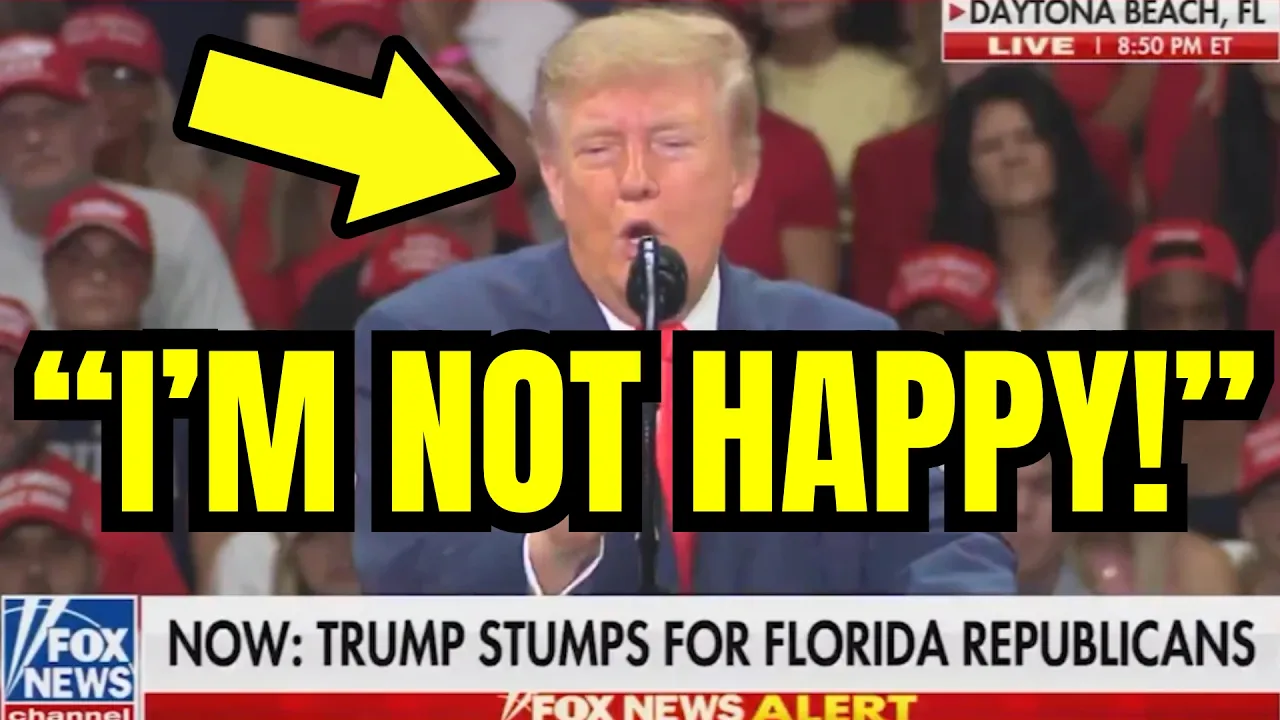
In a stunning moment during a recent MAGA rally in Florida, Donald Trump launched an unexpected and confusing attack on Representative Ro Khanna, a California Democrat and frequent guest on Fox News. Trump's remarks, which included a bizarre claim about Khanna's connection to Vietnam, left both his audience and political observers scratching their heads. The incident has sparked widespread discussion about Trump's grasp of facts, his obsession with Fox News coverage, and the broader implications for the Republican Party as it navigates a contentious midterm season.
This article examines the context of Trump's remarks, the factual inaccuracies involved, and the political fallout that has ensued. It also explores what this episode reveals about Trump's relationship with the media and his perceived vulnerabilities within his own party.
Context: Trump's Rally and Fox News Complaints
During the rally, Trump veered off script to complain about Fox News, the conservative network that has long been a staunch ally. He accused the network of giving Democrats more airtime than Republicans, singling out Ro Khanna as a frequent guest. "I watched this total dope Ro Khanna. Fox puts him on all the time," Trump said, visibly agitated. "Fox is giving Democrats more time than they give Republicans. I don't know what those people are doing."
This is not the first time Trump has criticized Fox News, but the frequency and intensity of his complaints have escalated. According to media reports, Fox News has been covering Trump's rallies less frequently, particularly in the lead-up to the midterms. This shift has reportedly irked the former president, who views any deviation from full loyalty as a betrayal.
Trump's frustration seemed to culminate in a series of disjointed remarks about Khanna. "He was in Vietnam. His leaders for 21 years were in—" Trump said, trailing off. The implication was unclear, but it appeared to suggest some sort of foreign allegiance or heritage link. Khanna, however, is an Indian-American born in Philadelphia, and he was not even alive during the Vietnam War. The claim left many in the audience and across the political spectrum bewildered.
Analysis: Factual Errors and Political Implications
The factual inaccuracies in Trump's statement are glaring. Ro Khanna has no connection to Vietnam, nor were his "leaders" in Vietnam for 21 years. Khanna was born in 1976, after the Vietnam War ended. Trump's remarks seem to conflate Khanna's Indian heritage with Vietnam, a mistake that underscores a pattern of careless rhetoric.
Moreover, Trump's assertion that Fox News gives Democrats more time than Republicans is demonstrably false. Fox News remains overwhelmingly favorable to Republicans and conservatives. The network does host Democratic guests like Khanna, but these appearances are often framed as adversarial interviews designed to challenge the guest. Khanna, known for his articulate defense of progressive policies, has proven adept at navigating these hostile environments, which likely frustrates Trump.
The former president's complaint that Fox News is platforming Democrats reveals a deeper insecurity. Trump seems to believe that any exposure to a competent Democratic voice could undermine his own narrative. This fragility is telling: if a single interview on a friendly network can threaten his hold on his base, it suggests a lack of confidence in the strength of his arguments.
Political analysts have noted that Fox News has been subtly pivoting toward a post-Trump era, covering his rallies less and focusing on other Republican figures. This shift may be a response to declining ratings and a desire to broaden appeal. Trump's public complaints about Fox are likely an attempt to pressure the network back into line, but they also highlight his diminishing influence over the conservative media ecosystem he once dominated.
Khanna's Response and the Broader Reaction
Ro Khanna responded to Trump's attacks with characteristic poise. In a tweet, he thanked Trump for the "shout outs" and invited him to tune into his upcoming Fox News appearance. "I'll be on Fox this Sunday to share more of my thoughts on your failure in Iran and how it's raised gas and food prices," Khanna wrote. "If you get a break from bragging about oil company profits and playing golf, tune in."
Khanna's response deftly turned Trump's attack into an opportunity to highlight substantive issues like inflation and foreign policy. It also underscored the contrast between Trump's personal insults and Khanna's policy-focused approach. The exchange quickly went viral, with many commentators praising Khanna for keeping his cool and steering the conversation toward meaningful topics.
The incident has also reignited discussions about Trump's mental acuity and his tendency to make baseless claims. Critics argue that such moments are symptomatic of a broader decline, while supporters dismiss them as harmless gaffes. Regardless, the episode has added to the sense of chaos and unpredictability that surrounds Trump's political activities.
Conclusion
Donald Trump's shocking Vietnam claim about Ro Khanna is more than just a verbal misstep; it is a window into his current political strategy and psychological state. By attacking a Democratic lawmaker for appearing on Fox News, Trump reveals his fear of any dissenting voice, even on a network that has been largely supportive. His factual errors and confusing rhetoric further erode his credibility, even among some of his own followers.
As the midterm elections approach, Trump's behavior will continue to be scrutinized. The question is whether his base will remain loyal despite these outbursts, or whether the cumulative effect of such incidents will eventually diminish his influence. For now, Ro Khanna's measured response serves as a reminder that substance and composure can triumph over bluster and misinformation.


0 Comments