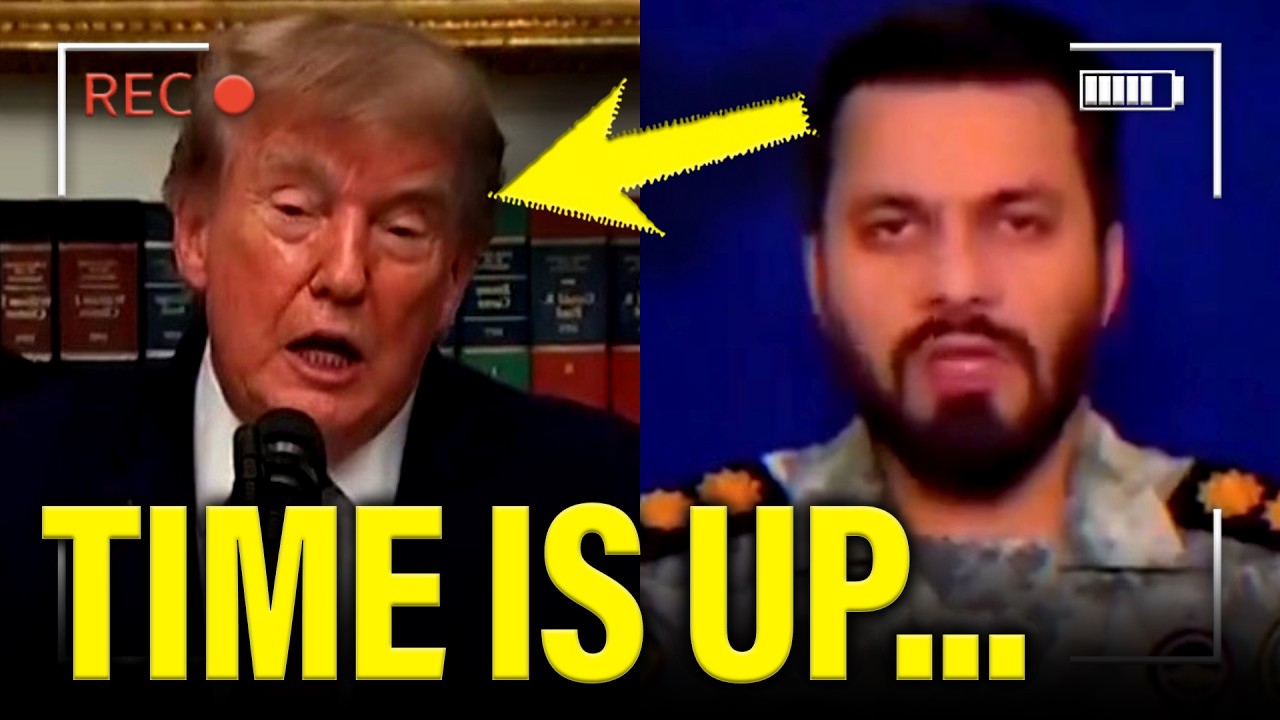
In a dramatic escalation of tensions, Iran's top military leaders have delivered a brutal and unambiguous message to the Trump administration: they are ready for war. According to Iranian state media, they believe that President Trump and Israeli Prime Minister Netanyahu are on the verge of launching a military strike. In response, Iran has showcased its military prowess, revealing that it now possesses more ballistic missiles, cruise missiles, and drones than before the conflict began. This bold display of strength is a clear warning: if you want to test us, go ahead.
Iran's Military Readiness and the Pickaxe Mountain Standoff
At the heart of this crisis is Pickaxe Mountain, a site the Trump regime claims Iran may be using to reconstitute a nuclear program. According to leaked reports, the Trump administration allegedly requested permission from Iran to drop a MOAB—the Mother of All Bombs—on the mountain in a performative strike that would allow Trump to declare victory and withdraw. Iran flatly rejected this request, according to Iranianbroadcast state media correspondent Morteza Gorgogi. In response, Iran has built massive trenches around the facility, signaling its readiness for a ground invasion. “If you send special forces, we are ready for those troops,” Iranian military leaders declared.
Trump's Alleged Request for a Performative Strike
The revelation that the Trump regime sought permission for a symbolic bombing raid has raised eyebrows. Critics argue it underscores a desire to save face rather than achieve a decisive military objective. Trump's public statements have only added to the confusion. In a recent interview on Newsmax, he discussed the MOAB, describing it as “not nuclear” but “like a tiny nuclear bomb.” He also claimed the U.S. has more nuclear weapons than Russia and China, a statement that has been fact-checked and disputed. Meanwhile, Iran has rejected any such performative strike, with Gorgogi stating that Trump's statements point to war within the next 24 hours and that Iran's military is in a state of complete readiness.
Escalating Tensions: Israel's Preemptive Strike Rhetoric
Adding fuel to the fire, Israeli media has leaked that Netanyahu's regime believes Iran is planning a preemptive strike. This mirrors the rhetoric used before the catastrophic war in late February. “We need to do the preemptive strike before Iran's preemptive strike,” Israeli officials reportedly said. This cycle of accusation and counter-accusation threatens to spiral into full-scale conflict. Trump, meanwhile, has retreated to Mar-a-Lago, his safe space where he previously launched the war, according to reports. His schedule includes a speech in Dalton, Georgia, where he downplayed the conflict as a “military exercise.”
Iran's Economic Warfare: Tankers and Oil Prices
Iran has not limited its response to military posturing. It has struck at least 30 tankers in the Strait of Hormuz since October 1st, according to the UK Maritime Trade Operations (UKMTO). However, the actual number may be much higher—perhaps 60 to 75—because many tankers are not reporting attacks. The UKMTO has acknowledged that the majority of vessels are not disclosing damage, leading analysts to extrapolate a higher toll. This campaign has driven oil prices above $110 per barrel, with some reports indicating $112. In the U.S., inflation is biting, with PPI at 6.3% and CPI at 3.7%. Iran's message is clear: if you economically ostracize us, we will disrupt your economy.
The Strait of Hormuz: A Chokepoint Under Fire
The Strait of Hormuz remains a flashpoint. Iran has demonstrated its ability to evade the U.S. blockade through ship-to-ship transfers, hiding its oil in other tankers, and utilizing land and rail routes. Admiral Brad Cooper, CENTCOM commander, recently claimed that the Strait is controlled by the U.S. and its partners, stating that 400 ships sailed through in the last seven days and 100 million barrels of crude oil were shipped. Critics, however, argue these numbers are exaggerated. “If you control the Strait, then put a navy destroyer in. Then put an aircraft carrier closer,” said one analyst. The credibility of such claims is further eroded by the fact that the Trump regime has purged top military leaders like General Randy George, former Army Chief of Staff, who warned of critical missile interceptor shortages through 2030.
Attacks on Shipping and the Human Cost
The human and economic toll is mounting. Recent attacks have targeted container ships, including one carrying 2,500 containers with French perfumes and iPhones. Video footage shows floating iPhones and other goods scattered across the water. These strikes not only disrupt global trade but also serve as a stark reminder of Iran's reach. Meanwhile, gas and diesel prices have hit record highs, exacerbating inflation and public frustration. The Trump administration's response has been to label the conflict a “military exercise,” a characterization that many find jarring given the loss of life and economic damage.
Trump's Controversial Remarks and Domestic Fallout
President Trump's rhetoric has not helped calm the situation. In a recent speech at Dalton Municipal Airport, he referred to the war as a “military exercise” and made a controversial joke about Middle Eastern names: “If you're in doubt about somebody's name from the Middle East, just say Muhammad. You got about a 65%.” Such remarks have been widely criticized as insensitive and inflammatory. They also distract from the serious nature of the conflict, which is claiming lives and destabilizing the region. As Trump heads to Mar-a-Lago, his first visit since May 1st, many wonder if he is preparing for a major escalation or seeking a way out.
Analysis: A Dangerous Game of Brinkmanship
The standoff between Iran and the Trump administration is a high-stakes game of brinkmanship. Iran's military buildup and its willingness to disrupt oil shipments demonstrate that it will not back down easily. The Trump regime's alleged request for a performative strike suggests a desire to avoid a protracted war while still appearing strong. However, Iran's rejection of that request and its preparations for a ground invasion indicate that it will not allow the U.S. to dictate terms. The situation is further complicated by Israel's threats of a preemptive strike and the broader regional instability. With oil prices soaring and inflation rising, the economic impact is already being felt globally. The purge of experienced military leaders like General George has raised concerns about the U.S.'s readiness for a prolonged conflict. The administration's claims about controlling the Strait of Hormuz are dubious at best, and Iran's ability to evade sanctions and continue exporting oil undermines the effectiveness of the blockade.
Conclusion: The World Holds Its Breath
As the situation deteriorates, the possibility of a massive escalation looms. Iran has delivered a fatal message to Trump's face: it is prepared for war and will not be intimidated. The Trump administration must decide whether to pursue a diplomatic solution or risk a catastrophic conflict that could engulf the Middle East and disrupt the global economy. For now, the world watches and waits, hoping that cooler heads prevail. But with each passing day, the drums of war beat louder.


0 Comments