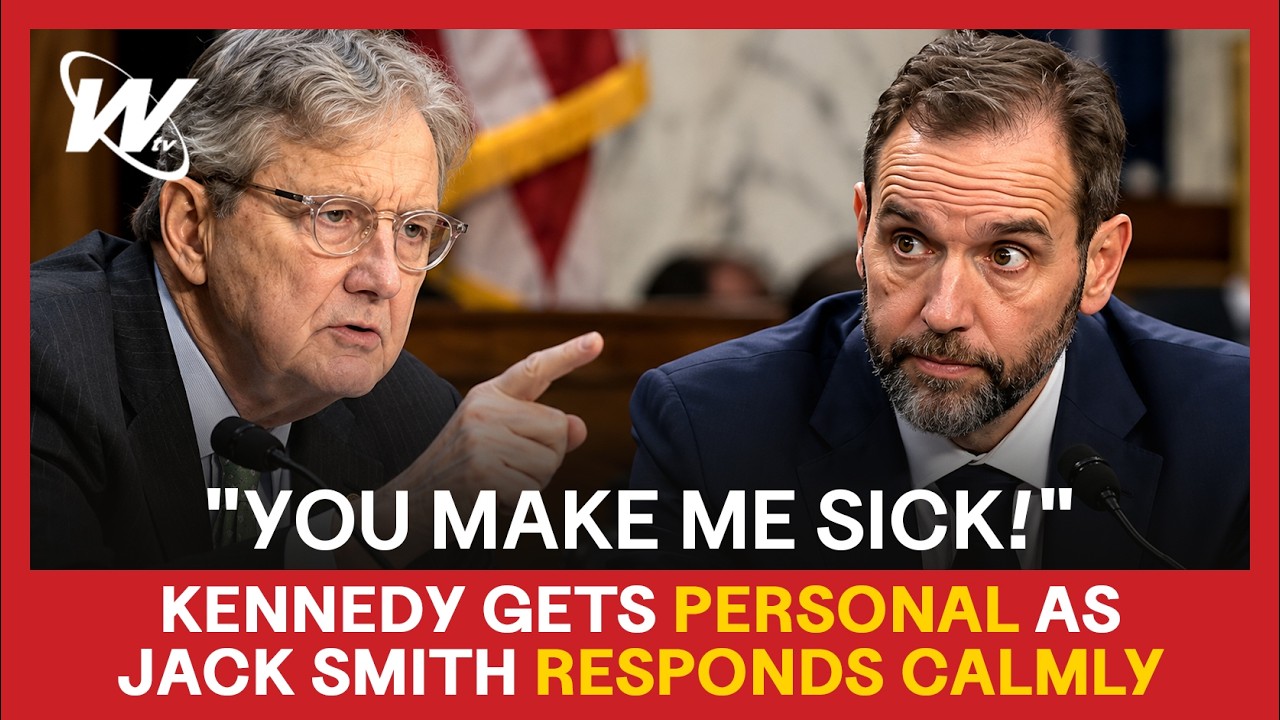
In a riveting and often personal hearing on Capitol Hill, Special Counsel Jack Smith faced intense questioning from Senator John Kennedy (R-La.) regarding his prosecution of former President Donald Trump. The exchange, which quickly turned heated, saw Smith maintaining his composure while Kennedy launched a series of accusatory and sometimes belittling questions. The hearing, ostensibly meant to examine the conduct of a federal prosecutor, devolved into a spectacle that raised questions about the nature of congressional oversight and the line between legitimate inquiry and political theater.
The Setting and the Stakes
The hearing was convened to scrutinize Smith's role as special counsel, particularly his decision to bring charges against Trump in two separate cases: one involving classified documents and another concerning efforts to overturn the 2020 election. Smith was appointed by Attorney General Merrick Garland in November 2022 to oversee these investigations, and his work has been a lightning rod for criticism from Trump allies and some Republicans who allege political bias.
Senator Kennedy, known for his sharp and sometimes theatrical questioning style, wasted no time in going on the offensive. He began by asking Smith about his background and perceived reputation, before moving to more pointed inquiries about Smith's family and alleged political motivations.
Kennedy's Aggressive Questioning
Kennedy's questioning was relentless. He asked Smith if he was "arrogant" and "self-righteous," and whether he had ever heard the expression "often wrong but never in doubt." Smith responded calmly, denying knowledge of the phrase and explaining his understanding of the terms. Kennedy then shifted to Smith's tenure at the International Criminal Court, suggesting it was a "worthy organization" that had threatened to prosecute American soldiers. Smith corrected the record, stating he was not aware of any such threats during his time there.
The senator also probed Smith's personal life, asking about his wife's political leanings and a documentary she produced about former First Lady Michelle Obama. Smith repeatedly declined to discuss his family, emphasizing that he was there to discuss his work as special counsel. "I'm not going to talk about my family," Smith said firmly. "I'm here to talk about my work as special counsel."
Kennedy's line of questioning was clearly designed to paint Smith as a partisan operative, but Smith's steady responses and refusal to take the bait seemed to frustrate the senator. At one point, Kennedy asked if Smith had lobbied Garland for the special counsel position, which Smith denied, stating he had accepted the role because of his 30 years of non-partisan experience.
The Central Allegation: Political Interference
Perhaps the most significant moment came when Kennedy asked whether Smith had informed Garland of his decision to prosecute Trump, and whether Garland had checked with President Biden. Smith acknowledged that he had informed Garland twice about his charging decisions, but he had no knowledge of any communication between Garland and Biden. "I have no idea what he did," Smith said. "My job as a prosecutor on the special counsel regulations was to make an independent decision."
This exchange gets to the heart of the Republican allegations: that the prosecution was politically motivated and orchestrated by the Biden administration. However, Smith's testimony emphasized the independence built into the special counsel regulations. While the Attorney General could theoretically countermand a special counsel's decision, Smith made clear that he made the charging decisions on his own after reviewing the evidence.
It's important to note that there is no public evidence that Biden or his White House staff directed Garland to prosecute Trump. Such an allegation, if true, would be a serious abuse of power, but suspicion alone is not proof. Congressional oversight should focus on uncovering facts, not on reinforcing partisan narratives.
The Speech or Debate Clause Controversy
Kennedy also raised a constitutional issue regarding Smith's efforts to obtain phone records of several Republican senators. Smith acknowledged that his office sought non-content toll records—information like phone numbers and call durations—relevant to the investigation. Kennedy accused Smith of violating the Speech or Debate Clause, which protects members of Congress from certain executive branch scrutiny, and of failing to disclose the scope of the request to the judge who approved it.
This is a legitimate constitutional concern. The Speech or Debate Clause is a vital protection for legislative independence, and any investigation that touches on congressional communications must be carefully scrutinized. However, Smith's office sought non-disclosure orders, which are standard in ongoing investigations to prevent tampering and protect the integrity of the probe. Whether the government's actions violated the Constitution is a legal question that would ultimately be decided by the courts, not by a senator's declaration during a hearing.
The Tone of the Hearing
Throughout the hearing, Kennedy's tone was dismissive and mocking. He asked Smith if he believed in the tooth fairy and the Easter Bunny, and whether he thought Jimmy Hoffa died of natural causes. These questions, while perhaps intended to be humorous, detracted from the serious nature of the proceedings. At one point, Kennedy accused Smith of stalling, telling him, "Don't please don't filibuster me." Smith, for his part, remained composed, often answering with a simple "yes" or "no" and providing context when necessary.
The most jarring moment came when Kennedy, after accusing Smith of being biased, said, "You make me want to throw up in my mouth." This personal attack underscored the hostile atmosphere and raised questions about the decorum of the hearing. It also highlighted the extent to which the proceedings had become personal rather than substantive.
Assessing the Oversight
From a progressive perspective, it is essential to hold prosecutors accountable. The power to charge crimes, especially against a former president, is immense and must be exercised with integrity and transparency. Jack Smith should face scrutiny, and any evidence of political bias should be thoroughly investigated.
However, the hearing also demonstrated the dangers of turning oversight into a spectacle. Kennedy raised a legitimate constitutional issue regarding the Speech or Debate Clause, and that deserves a serious answer. But many of his questions were ad hominem attacks or attempts to smear Smith by association—such as bringing up his wife's political leanings—that have no bearing on the legality of the prosecution. If there is evidence that Smith acted improperly, it should be presented through facts and documents, not through personal insults.
Moreover, the hearing failed to address the substantive evidence that Smith's team compiled. The decision to prosecute Trump was based on what Smith described as "incredibly strong evidence" of serious crimes. That evidence was never tested in a jury trial because the cases were delayed and eventually dismissed due to legal and procedural challenges. But the existence of that evidence, and the seriousness of the alleged conduct, should not be overshadowed by political theatrics.
Conclusion
The hearing was a microcosm of the broader political divide in America. On one side, Jack Smith represents a commitment to the rule of law and the principle that no one is above it. On the other side, Senator Kennedy and his allies see a politically motivated prosecutor targeting their leader. The truth, as always, is more complex.
What is clear is that Jack Smith conducted himself with professionalism and restraint under intense pressure. He answered questions directly, refused to be drawn into personal attacks, and consistently redirected the conversation to his work as special counsel. Whether one agrees with his decisions or not, his demeanor stood in stark contrast to the hostility directed at him.
Ultimately, the American people deserve a thorough and fair examination of the events surrounding the prosecution of Donald Trump. That examination should be based on evidence, not innuendo, and on the law, not personal animus. Congressional oversight has a vital role to play, but it must be conducted with seriousness and respect for the institutions involved. The hearing with Jack Smith fell short of that standard, but it provided a revealing glimpse into the high-stakes battle over accountability and justice in America.


0 Comments