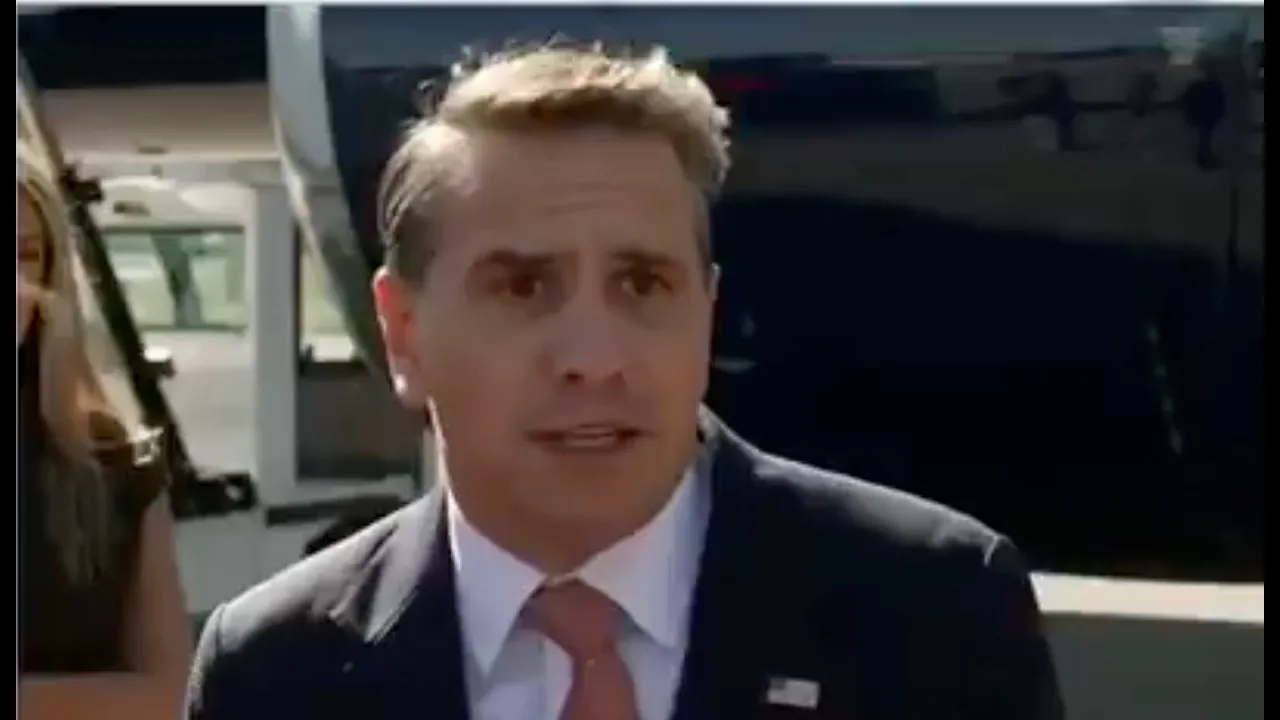
In a stunning exchange that has sent shockwaves through the political and legal establishment, Attorney General Todd Blanche refused to rule out the possibility that the Department of Justice could intervene to block states from certifying election results. The remarks, made during a recent interview, have ignited a firestorm of criticism and raised urgent questions about the integrity of the upcoming midterm elections and the future of American democracy.
The Exchange That Sparked Alarm
When pressed on whether there was any scenario in which the DOJ would weigh in on the certification process or attempt to block states from certifying, Blanche did not offer a flat denial. Instead, he hedged, acknowledging that "hypothetically" such scenarios could exist, though he characterized them as "doomsday" situations. He stated that it is not DOJ's intention to improperly interfere with elections, but he explicitly declined to say there are no circumstances under which the department would ever do so.
Blanche also attempted to downplay the concern by saying he is not planning his days around the election in order to be somewhere to not certify. However, critics argue that this caveat does little to reassure those who fear the DOJ could be weaponized to overturn results. The refusal to categorically rule out interference is being interpreted by many as a green light for potential abuse.
Legal experts and democracy advocates were quick to react. Marc Elias, a prominent election lawyer and founder of Democracy Docket, called the statement a "five-alarm fire" and warned that it signals a willingness to subvert the will of voters. "Todd Blanche is telling us that there are circumstances under which the Department of Justice would try to block certifications of elections," Elias said. "This is not something we can ignore."
The Legal and Historical Context
The certification of elections is a state-level process, mandated by law, in which officials verify the results and formally declare winners. The federal government, including the Department of Justice, has no formal role in this process. Historically, the DOJ has been involved in election-related matters only in cases of clear federal crimes, such as voter intimidation or fraud, but never to block certification.
Blanche's comments come amid a broader pattern of attacks on election administration. In California, the DOJ has been accused of spreading disinformation and filing lawsuits that suggest election officials are committing crimes for following state law. Elias noted that these actions are happening in real time and are laddering up to the attorney general's refusal to rule out certification interference.
The Trump administration's previous efforts to overturn the 2020 election, including pressure on state officials and the infamous fake elector scheme, are still fresh in the public memory. Many see Blanche's remarks as a continuation of that playbook, setting the stage for similar attempts in future elections.
Analysis: A Threat to Democracy
The attorney general's refusal to rule out blocking certification is deeply troubling for several reasons. First, it undermines the principle that election outcomes are determined by voters, not by federal officials. Second, it creates a chilling effect on state election officials, who may fear federal retaliation for certifying results that the administration dislikes. Third, it erodes public trust in the electoral process, already battered by years of baseless fraud claims.
Blanche's attempt to distinguish between "proper" and "improper" interference is a distinction without a difference. As Elias pointed out, the only thing Blanche likely considers improper is when Democrats win. The refusal to rule out action leaves the door open for partisan manipulation, with the DOJ potentially justifying intervention under the guise of addressing "emergencies" or "irregularities."
Moreover, the DOJ's actions in California and other states suggest a pattern of targeting Democratic-leaning jurisdictions. This selective enforcement raises serious concerns about equal protection and the rule of law. If the DOJ can block certification in one state, what is to stop it from doing so in others?
The guardrails that once protected against such abuses are weakening. Many large law firms and corporate media outlets have been cowed into silence, unwilling to challenge the administration. As Elias noted, the burden of defending democracy falls on a shrinking pool of attorneys and activists. His firm, Elias Law Group, is litigating more than 30 cases against the DOJ and has won 26 straight cases involving state voter rolls. But resources are finite, and the fight is generational.
What Can Be Done?
In the face of this threat, ordinary citizens are not powerless. Elias and others are urging voters to take proactive steps to ensure their votes are counted. This includes voting early in person if possible, and if voting by mail, using drop boxes or delivering ballots in person rather than relying on the postal service. Voters should also verify their registration and polling locations ahead of time.
Beyond voting, citizens can get involved in election protection efforts. Volunteering for campaigns, calling local officials, or joining nonpartisan organizations like the League of Women Voters, the NAACP, or LULAC can make a difference. Documenting and sharing instances of voter suppression, as students at North Carolina A&T did when they walked a mile to vote after early voting sites on campus were cut, is also crucial.
Finally, holding elected officials accountable is essential. Republicans must be asked directly whether they support the DOJ blocking certification. Legacy media must be pressured to cover this story with the urgency it deserves. And voters must make their voices heard at the ballot box.
Conclusion
Attorney General Todd Blanche's refusal to rule out blocking election certification is a clear and present danger to American democracy. It is a signal that the DOJ may be willing to interfere in the electoral process for partisan gain. The legal and historical norms that have long governed election administration are being tested, and the guardrails that remain are fragile.
This is not a drill. It is a call to action for every American who believes in free and fair elections. The fight to protect democracy is not just for lawyers or activists; it is for all of us. As Marc Elias said, "We all have a role to play, and we all need to play it." The future of the country depends on it.


0 Comments