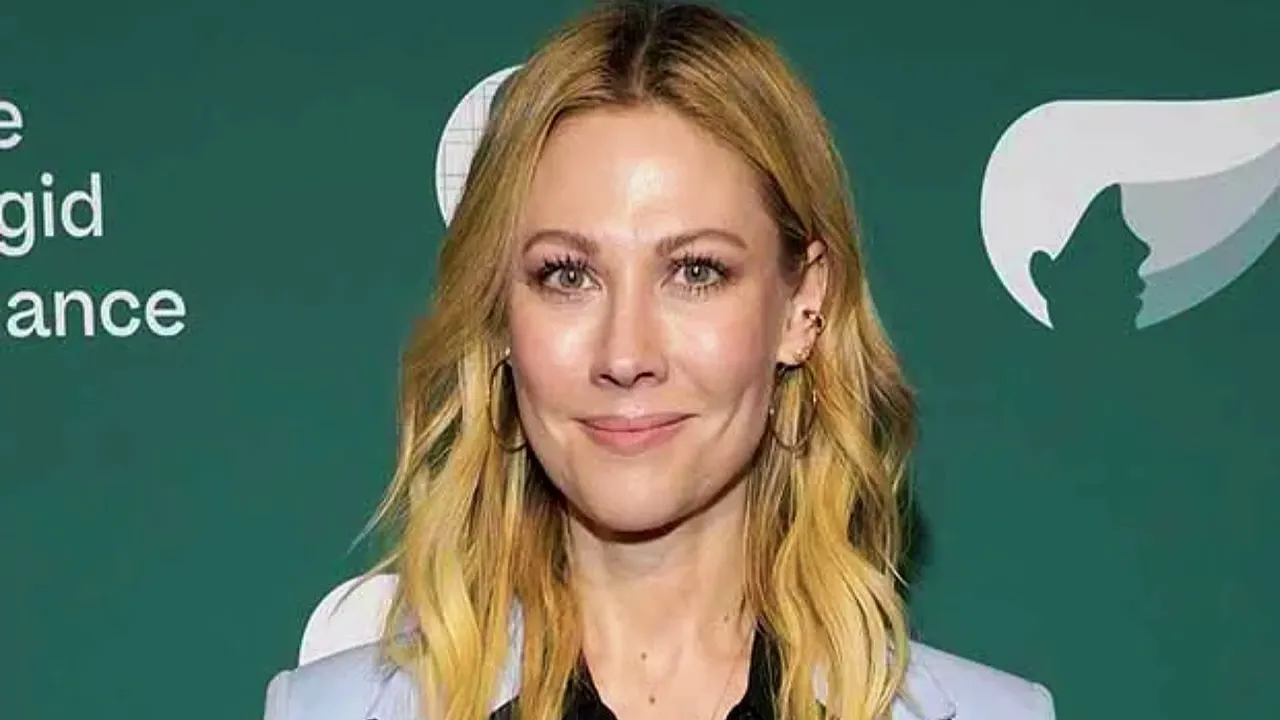
In a commencement speech that quickly went viral, President Donald Trump delivered a bizarre mix of motivational advice and self-promotion, leaving late-night hosts Desi Lydic and Jimmy Kimmel to dissect his claims about academic prowess. The speech, intended to inspire graduates, veered into familiar territory: Trump's own accomplishments, including his attendance at the Wharton School of Finance. But as the hosts revealed, the public record paints a more nuanced picture than Trump's boasts suggest.
The Speech That Started It All
Trump began with a classic message to graduates: work hard, think big, chase your dreams, and never give up. He invoked Steve Jobs and Walt Disney as examples of young people achieving remarkable things early in life. "In America with driving ambition, young people can do anything," he declared. But the speech soon shifted from broad inspiration to personal anecdote, as Trump recounted his own early gamble developing the Grand Hyatt hotel in Midtown Manhattan at age 28.
What made the speech memorable, however, was its abrupt transition into what felt like a sales pitch. Trump congratulated the audience, saying "you made America proud" and calling them "a true winner, just like me," before launching into a promotion for a graduation card on flash sale. The moment encapsulated the surreal blend of commencement address, political rally, and QVC segment that defined the speech.
The Wharton Bragging: Fact vs. Fiction
The core of the controversy lies in Trump's repeated references to his education at the Wharton School. "I'm highly educated. I went to the Wharton School of Finance," he said, a line he has used many times. He also claimed to have been "a very fine student" and has previously stated he heard he finished first in his class. But here's the rub: while it's undisputed that Trump attended the University of Pennsylvania and graduated from Wharton in 1968, there is no public evidence that he ranked number one in his graduating class.
His grades and complete academic records have never been released, leaving the exact class ranking unknown. This gap between claim and documented fact became the focal point of Desi Lydic's segment, where she turned the discrepancy into comedy. The joke, as she framed it, is not about whether Wharton is a respected institution—it is—but about the specific, unverified boast of being top of the class.
Desi Lydic's Take: The Comedic Gold of Contradiction
Lydic zeroed in on the absurdity of Trump's self-description. In one clip, Trump says, "I used the word incompetent. Now I just call him stupid. I went to an Ivy League school. I'm very highly educated. I know words. I have the best words." The punchline, as Lydic noted, is that after all that talk of vocabulary, the big word he lands on is simply "stupid." The moment goes from "I am highly educated" to "anyway, stupid" in seconds, highlighting the comedic disconnect between his claims and his delivery.
But the Wharton fixation goes deeper. Trump has often invoked his Ivy League pedigree as a marker of intelligence. In another clip, he recalls meeting "very smart people" at Wharton and watching "some of the most incredible brilliant students" fail to succeed because they lacked drive. The message: brilliance without persistence is worthless. Yet the irony, as Lydic pointed out, is that the one person he implies had both—himself—cannot produce a record to substantiate his own academic standing.
The Cognitive Test Flex: A Weird Brag
The speech also included a moment that left audiences scratching their heads. "Anybody running for president or vice president should take a cognitive test," Trump said. "So, I've taken three. No president, think of this, has ever taken one." The line drew laughter, with Lydic calling it "a weird flex." She compared it to "bragging about being the only kid in school who gets a special helper." The joke lands because it highlights the strange pride Trump takes in an achievement that is, at best, unusual and, at worst, a sign of insecurity.
This cognitive test boast is part of a broader pattern: Trump frequently cites his mental acuity and academic background as proof of his fitness for office. But as the hosts illustrated, the more he talks, the more the claims seem to backfire. Whether it's the class ranking or the cognitive test, the gap between assertion and evidence is where the comedy lives.
The State of the Union: When Graphic Becomes Grotesque
The segment also touched on another Trump speech—the State of the Union—where his descriptions of violence reached Tarantino-esque levels. In one clip, Trump described a person "gushing blood which was flowing back down the aisle, viciously slashed, bleeding profusely, blood all over, shredding his leg into numerous pieces." Lydic's reaction: "Oh my god, the violence. Was this a State of the Union speech or a Quentin Tarantino movie? All it's missing is Uma Thurman's bare feet."
The joke is not about disrespecting victims of tragedy—honoring their suffering is appropriate. The issue is the gratuitous, graphic detail with which Trump narrates such events. As Lydic put it, "We used to have presidents who could do that without sounding like a 6-year-old dismembering his G.I. Joes." The comparison is apt: the speech sounds less like a solemn address and more like a child excitedly describing a toy battle. It's a reminder that Trump's rhetorical style, whether bragging about Wharton or describing violence, often prioritizes spectacle over substance.
The Bigger Picture: Why This Matters
At its core, the Wharton controversy is a microcosm of Trump's relationship with facts. He attended Wharton—that's true. But the claim that he was the best student, the top of his class, is unsubstantiated. And in the absence of evidence, the claim becomes a punchline. Late-night hosts like Lydic and Kimmel aren't just making jokes; they're pointing out the pattern of exaggeration that defines Trump's public persona.
This pattern extends beyond academics. From crowd sizes to election results, Trump has a history of making claims that are not supported by evidence. The Wharton boast is just one example, but it's a telling one because it's so easily checkable. The fact that he keeps repeating it, despite the lack of proof, suggests that the goal is not accuracy but impression. He wants to be seen as the smartest, the best, the winner—whether or not the record backs him up.
The Comedy of Contradiction
What makes this segment so effective is that it doesn't rely on outrage. Instead, it uses humor to highlight the absurdity. When Trump says he has "the best words" and then calls someone "stupid," the joke is self-evident. When he brags about a cognitive test, the comparison to a special helper is both funny and cutting. And when he claims to have been number one at Wharton, the absence of evidence becomes the punchline.
Desi Lydic and Jimmy Kimmel are not journalists, but their comedy serves a journalistic purpose: it holds public figures accountable by pointing out inconsistencies. In an era of misinformation, satire can be a powerful tool for truth-telling. The Wharton joke works because it's rooted in fact: Trump did go to Wharton, but the rank-one claim is unverified. The humor comes from the gap between the two.
Conclusion: The Records Speak Louder Than the Boasts
Donald Trump's commencement speech was a rollercoaster of inspiration, self-promotion, and unintended comedy. His repeated references to Wharton, his cognitive tests, and his graphic descriptions of violence all fed into a narrative that late-night hosts were quick to exploit. But beneath the jokes lies a serious point: public figures should be held to account for their claims, especially when those claims are easily checked.
In this case, the record shows that Trump graduated from Wharton, but it does not show that he finished first in his class. That discrepancy is the heart of the story. It's a reminder that bragging about academic credentials is risky business when the transcripts are sealed. And it's a reminder that comedy can be a potent weapon in the fight for factual accuracy. As Desi Lydic and Jimmy Kimmel demonstrated, sometimes the best way to expose a falsehood is to laugh at it.


0 Comments